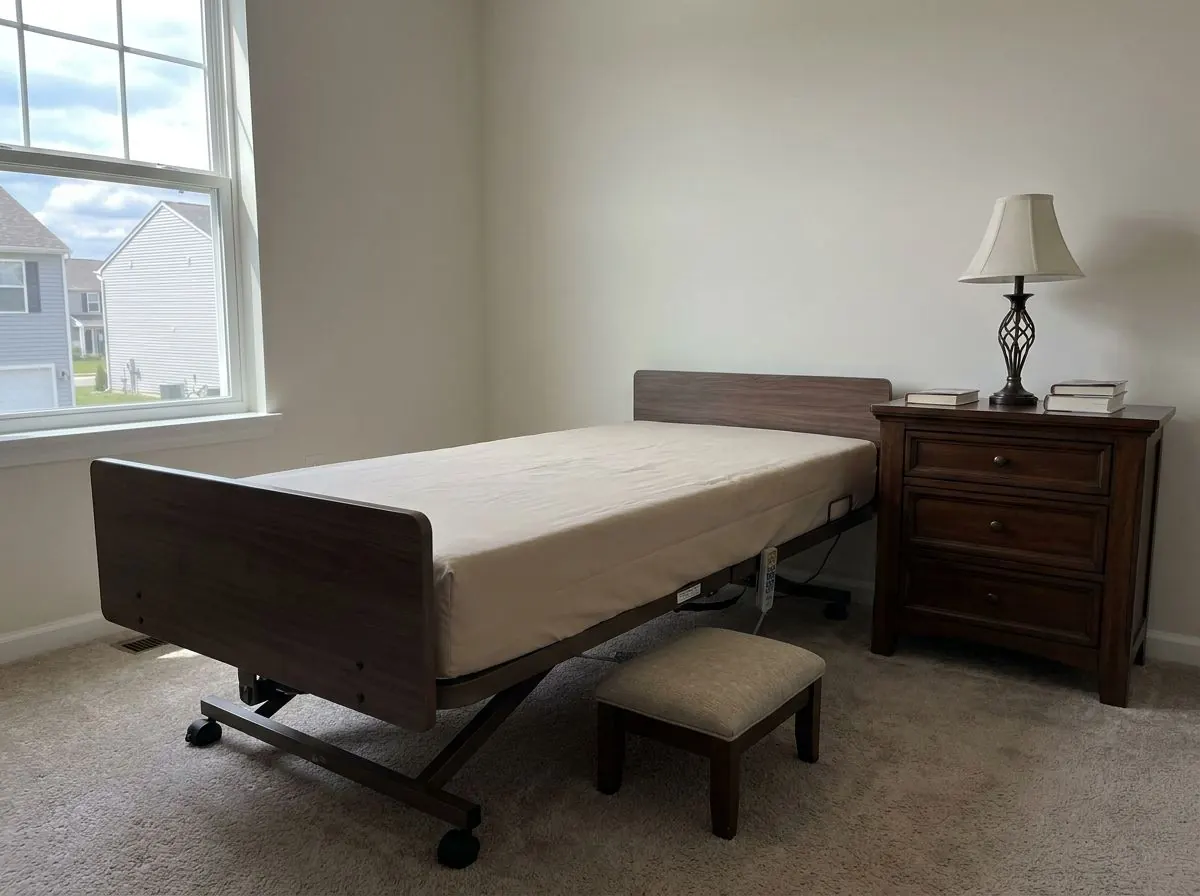
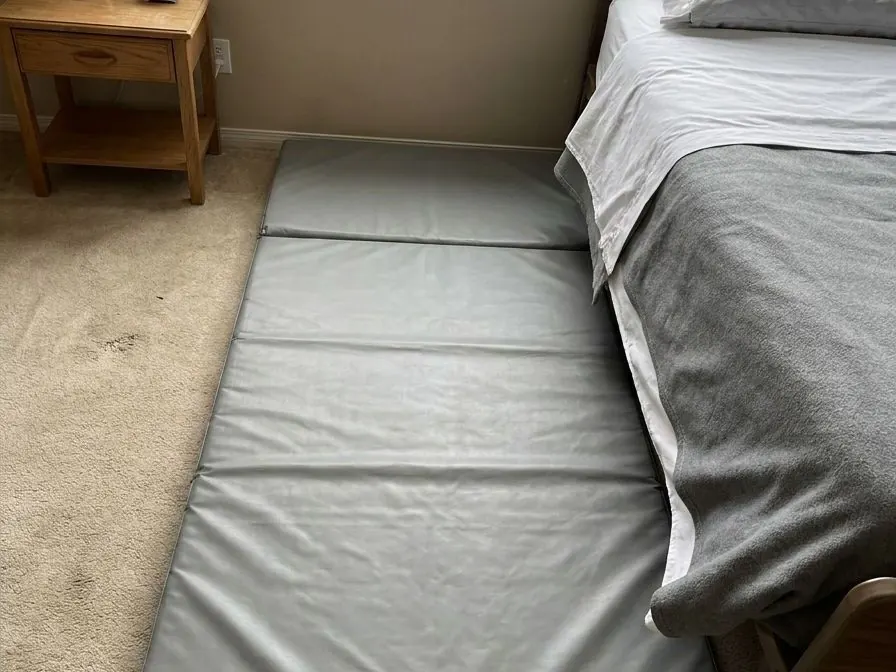
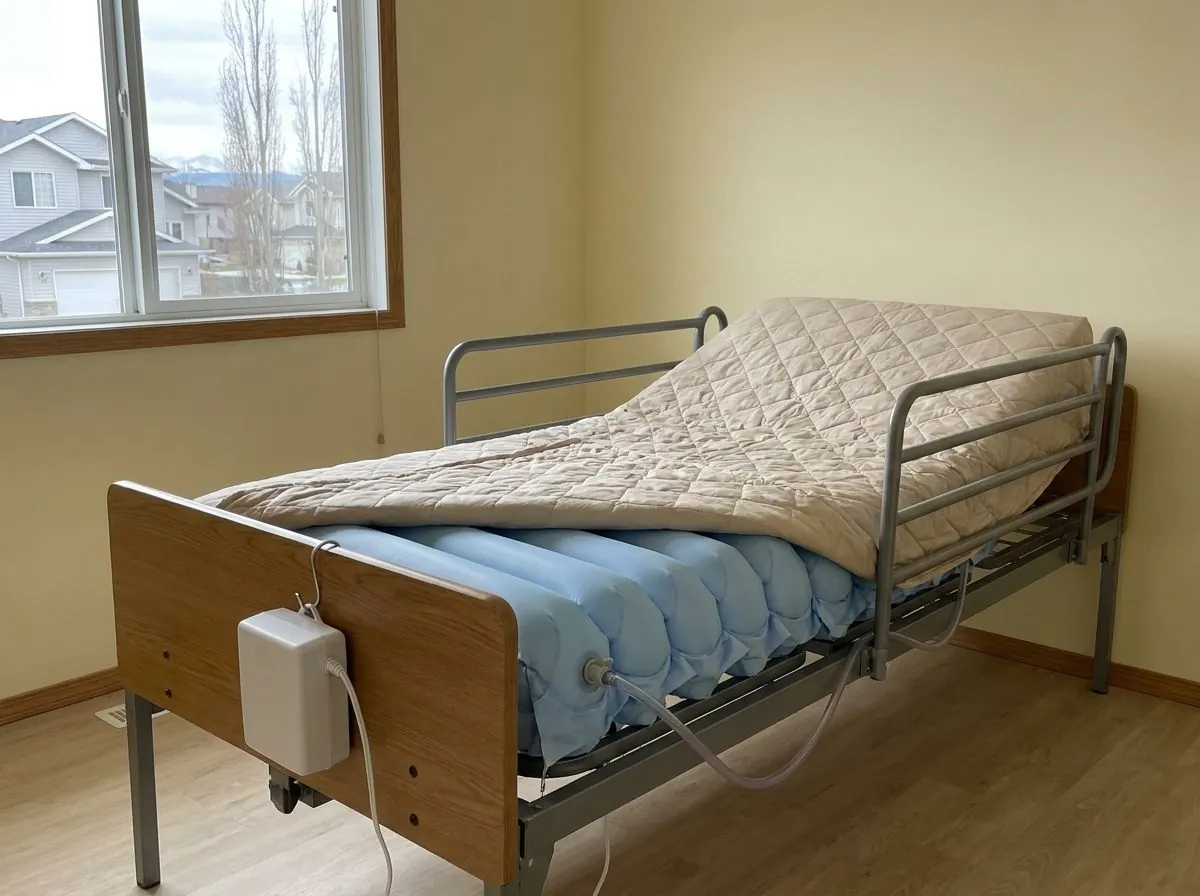
A low hospital bed brings the deck down close to the floor, so if someone rolls or slides out, the drop is short. Beds in this class lower the deck to about 9 to 10 inches, then rise again to a normal working height for care and transfers. With a padded mat on the floor beside it, a low bed gives the care team a way to manage fall risk that does not depend on fencing the person in with rails.
We rent low-height safety beds in Calgary and area and match the specific bed to the person. The beds described on this page are published manufacturer examples of the class, not a promise of one exact model: when you phone, we confirm the bed we will supply, its deck range and its ratings, and quote the monthly rate at the same time.
The rate depends on the model we match to the user. Phone and we will quote it on the spot.
Who this rental is for, and when it is needed
The typical call is about a parent with dementia or delirium who kept trying to climb over the rails in hospital, or who was found on the floor beside their own bed at home. Staff at Rockyview General Hospital or Peter Lougheed Centre may have used a low bed and a floor mat during the admission, and the discharge plan asks for the same setup at home.
Low beds also suit people who are restless at night and roll toward the edge, people after a stroke with weakness on one side who can misjudge where the mattress ends, and people in palliative care who move unpredictably but for whom rails feel confining. The aim in every case is the same: accept that the person may leave the bed, and shorten the distance to the floor if they do.
Decisions about rails, mats and how low to set the bed belong to the care team, usually the OT or nurse who has watched how the person moves. Our job is the equipment, the setup and showing the family the routine, so the plan written at the hospital actually works in the bedroom.
Situations we set this up for
Found on the floor beside the bed, or a near miss
Dementia or delirium with attempts to climb over rails
Restless nights, rolling toward the edge of the mattress
One-sided weakness after a stroke
A discharge plan that specifies a low bed and floor mat
Palliative care where rails are not wanted
Continuing a low-bed routine from hospital or care home
Models and specifications
Figures below are the manufacturer's published specifications. We confirm the exact unit and its ratings with you before delivery.
Drive Medical
Delta Ultra-Light 1000 Full-Electric Low Bed (example model) Model 15235
Example model, shown for its published specifications; we confirm the exact bed we supply before delivery. Drive’s low version of its Delta Ultra-Light 1000 shows what the class looks like on paper: a deck that travels from 9.25 inches up to 23 inches, a 450 lb maximum that includes the occupant, and a bed weight of 175 lb.
That 14-inch travel is the point of a low bed. During the day a caregiver raises the deck to work comfortably; at night it comes back down. Like the standard Delta, a 9-volt battery in the hand control can lower the head and foot sections nine times in a power outage, and Drive puts the high-low crank access on top of the bed, where it can still be reached when the frame is close to the floor.
Deck height
9.25" to 23"
Maximum weight
450 lb, including the occupant
Bed weight
175 lb
Outage backup
9V battery in hand control lowers head and foot up to 9 times
Crank access
Top-mounted high-low crank
Invacare
Full-Electric Low Bed (example model) Model 5410LOW
Example model, shown for its published specifications; we confirm the exact bed we supply before delivery. Invacare’s full-electric low bed measures its range from the floor to the deck: 9.5 inches at the lowest and 20 inches at the highest, on a 36 by 80 inch surface. It is rated at 350 lb for the patient and 450 lb total, inclusive of accessories.
Invacare has described this bed as intended for people at risk of falling from bed where rails are not desirable or appropriate. That is the situation where a low bed does its most useful work: rather than a barrier the person might climb, it offers a short, predictable distance to a mat.
Deck height (floor to deck)
9.5" to 20"
Surface
36" W × 80" L
Patient weight capacity
350 lb
Total capacity
450 lb, inclusive of accessories
Deck
Split-spring design
Drive Medical
Full Electric Low Height Bed (example model) Model 15005LP
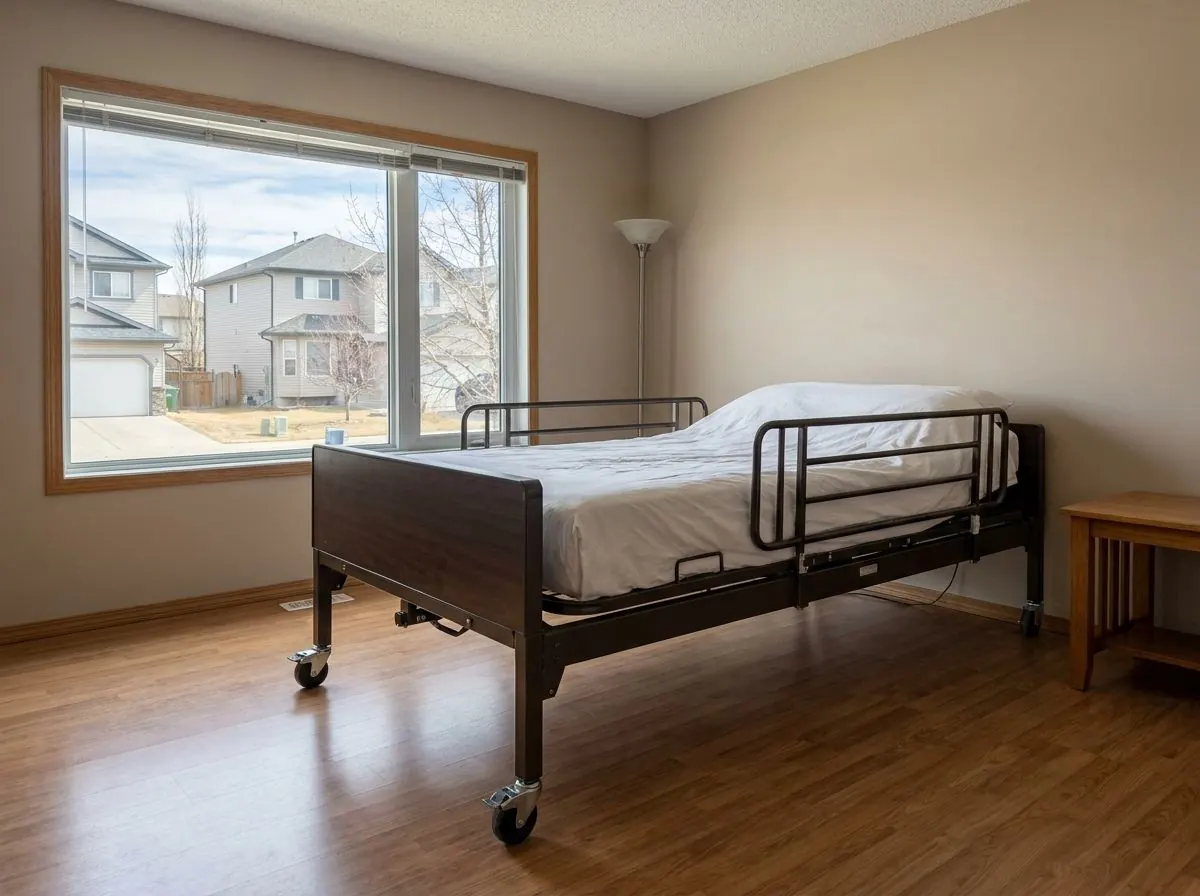
Example model, shown for its published specifications; we confirm the exact bed we supply before delivery. This Drive bed, also sold through Drive’s Canadian site, shows why a low bed’s range comes with conditions. Set up to roll only at its low height, the deck goes from 9.25 inches (235 mm) to 23 inches (585 mm). Set up to roll at any height, the lowest point becomes 14.81 inches (376 mm). A bed that must be moved around the room often will not reach the lowest figure.
The hand pendant moves the head, foot and height, and an Auto-Contour function raises the head and foot together, which Drive says limits sacral shear (the dragging of skin at the base of the spine as the head comes up). Capacity is 350 lb (158 kg) for the patient and 450 lb (204 kg) in total, including occupant, mattress, rails and accessories. For a power failure there is a top-mounted high-low crank and a manual crank override.
Deck height, rolls at low height only
9.25" (235 mm) to 23" (585 mm)
Deck height, rolls at any height
14.81" (376 mm) to 23" (585 mm)
Patient weight capacity
350 lb (158 kg)
Total capacity
450 lb (204 kg), including occupant, mattress, rails and accessories
Controls
Hand pendant: head, foot, height; Auto-Contour
Power failure
Top-mounted high-low crank; manual crank override
What makes it work at home
A short drop to the floor
At its lowest the deck sits about 9 to 10 inches up, depending on the bed. The mattress adds its own thickness on top, so the sleeping surface is a little higher than the deck figure.
Normal height when care is happening
The same bed rises to around 20 to 23 inches for washing, dressing and transfers, so caregivers are not kneeling on the floor to help.
Floor mats beside the bed
A padded mat on the side the person is most likely to leave from softens a roll-out. We place mats to the care plan: one side, both sides, or none.
Rails as a choice, not a default
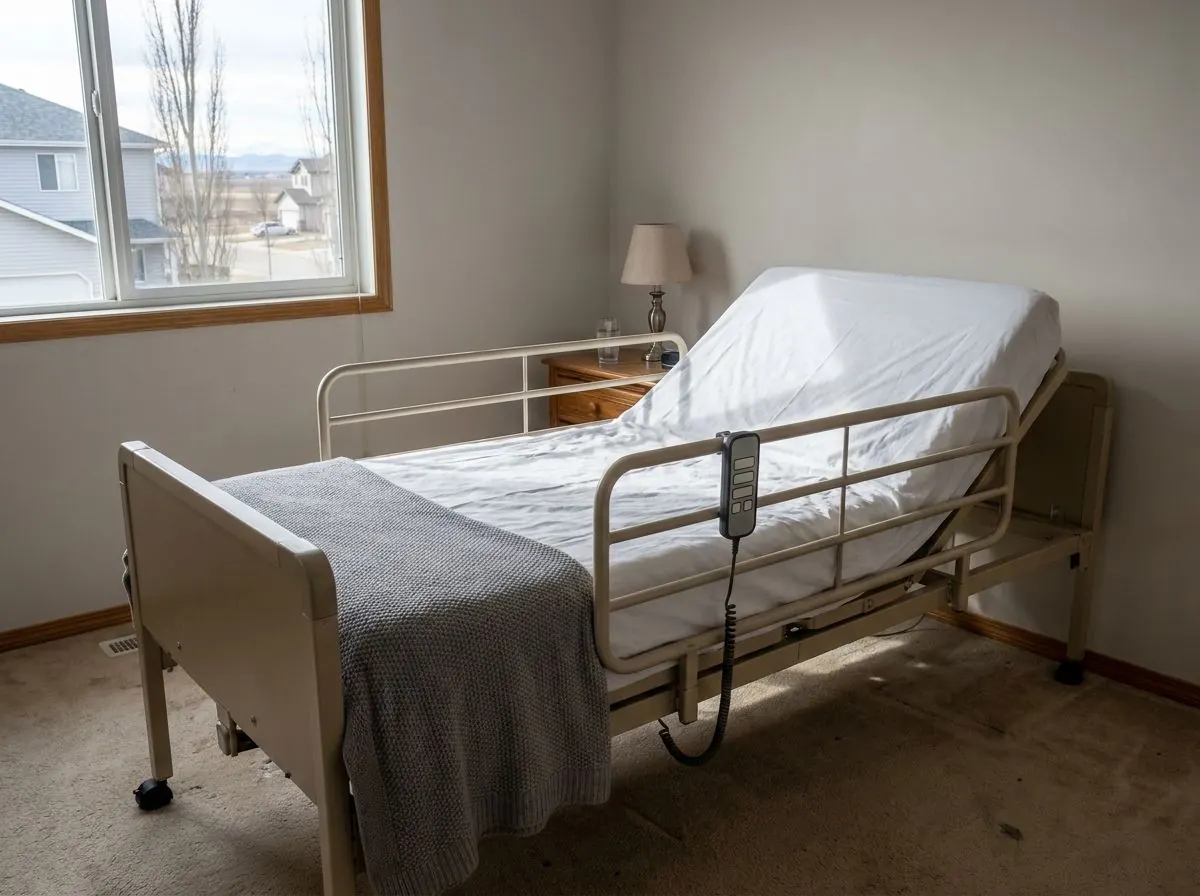
Some plans use half rails for a handhold, others no rails at all. The care team decides, and we fit the bed to that decision.
Backup you can reach near the floor
The example beds put crank access on top of the frame, and the Drive Delta low bed adds a battery in the pendant, so an outage does not mean lying on the floor to find a handle.
Delivery and setup
A low bed setup is as much about the floor as the bed. We assemble the bed in the room, run it through its full height range, and check how low the sleeping surface really sits with the mattress on. If the care plan includes floor mats, we place them where the person is most likely to leave the bed, then lower the frame again to make sure nothing is underneath: a mat edge, a charging cable or a slipper caught under a descending frame is a genuine hazard.
Caregivers are shown the routine that makes a low bed work: raise it to working height for care, bring it back to its lowest position before leaving the room, and put the mat back each time. We also route the power cord so the moving frame cannot catch it, and show how that bed lowers or cranks in an outage. If the person is coming home from South Health Campus or Foothills Medical Centre on a low-bed plan, call with the discharge date as early as you can, because stock of low beds varies.
Clear floor space along the long side or sides of the bed for a mat.
Move bedside tables and dressers with hard corners out of the area beside the bed.
Lift rugs and runners that would sit under or next to a mat.
Plan a night light along the route to the bathroom.
Find an outlet where the cord can run behind the bed rather than beside it.
Move chargers, cables and slippers away from where the frame lowers.
Ask the care team whether the plan uses rails, one mat or two.
Choosing the right one
Low bed or rails? They answer different questions. Rails give something to hold and mark the edge of the mattress, which helps some people turn safely. For a person who is confused and determined to get up, rails can become something to climb over, and a fall from over a rail starts higher. A low bed without rails, with a mat beside it, takes the opposite approach: it lets the person leave the bed and aims to keep that trip to the floor short. Some plans combine a low bed with half rails; the OT or nurse decides, and we can set the bed up either way.
Against the other beds here, a standard full-electric bed does not do the same job even with a mat, since the Invacare 5410IVC sleep surface bottoms out at 15 inches. A low bed is not a heavy-duty frame: the example beds are rated at 450 lb total including the person, so a heavier person needs a bariatric bed instead. And if skin care is also a concern, remember that any air mattress added to a low bed raises the sleeping surface, so the care team should weigh pressure care against the lowest achievable height.
Paying for the rental
In AADL’s terms a low bed is a homecare bed, so the same criteria apply: the person is palliative and wants to stay at home, or spends 80 per cent or more of the day in bed, and a nurse, OT or PT authorizes the benefit. Where a person qualifies, AADL supplies from its recycled inventory first, and the family generally pays the program’s 25 per cent cost-share up to a yearly maximum, with an exemption for lower incomes. AADL will not pay for renting a bed for a temporary or short-term need, and authorizers are required to tell clients so. A person at risk of falls who is up for much of the day may not meet the bed criteria at all, which is often when a private rental makes sense.
Private and workplace plans vary widely. Ask whether a low bed counts under the plan’s hospital bed or medical equipment benefit, whether renting is eligible, and what paperwork is needed; usually that means a prescription or written recommendation from a physician plus itemized receipts, which we provide. First Nations and Inuit clients covered by NIHB should know that NIHB treats rentals as support for short-term or acute conditions, generally limits rental agreements to three months unless it indicates otherwise, and requires a prescription. A hospital bed supplied on a qualifying health professional’s written order can be zero-rated for GST; send us a copy and we will confirm before invoicing.
Phone us with the discharge date and what the care team has recommended. We book delivery to arrive before the patient does, whether they are leaving Foothills Medical Centre, Peter Lougheed Centre, Rockyview General Hospital or South Health Campus. Same-day delivery depends on stock and the time you call, so the earlier the better.
In this class the deck lowers to about 9 to 10 inches from the floor: 9.25 inches on the Drive examples and 9.5 inches on the Invacare example. The mattress sits on top of the deck, so the sleeping surface is higher by its thickness. We check the real height with the mattress on during setup.
Does a low bed come with rails?
It can come with or without them. Rails help some people turn and hold on, but a confused person may try to climb them, which is why some care plans use a low bed with no rails. Follow the OT or nurse’s advice and tell us what they recommended when you book.
Do you supply the floor mats?
Yes, floor mats can be included with a low bed rental. Tell us whether the care plan calls for a mat on one side or both, and whether the person walks with a walker, so we can place the mats where they help rather than get in the way.
Will a low bed stop my mother from falling?
No bed can promise that. A low bed shortens the distance if she leaves the bed or rolls out, and a mat softens the landing. It does not replace supervision, a clear path to the bathroom, or the rest of the fall plan her care team has made.
Is it hard for caregivers to work with the bed so low?
The bed does not stay low during care. The example beds rise to 20 or 23 inches, so caregivers raise it for washing and changes, then lower it again before leaving the room.
Why is there no monthly price listed for low beds?
The rate depends on which low bed we match to the person, whether mats and rails are included, and what is in stock. Phone us with the care plan and we will quote the monthly rate during the call.
Can an air pressure mattress go on a low bed?
It can be done, but systems such as the Med-Aire (8 inches) and PressureGuard Easy Air (7 inches) are deep, and that depth raises the sleeping surface, which works against the purpose of a low bed. Ask the care team which matters more for this person, and we will confirm the combination fits before delivery.
Rent low beds in Calgary
Tell us who it is for, the date you need it and the room it goes in. We will confirm the model, the monthly rate and a delivery window.