Skip to content
Discharge-day delivery: (825) 445-5851

Electric Hospital Beds & Pressure Care

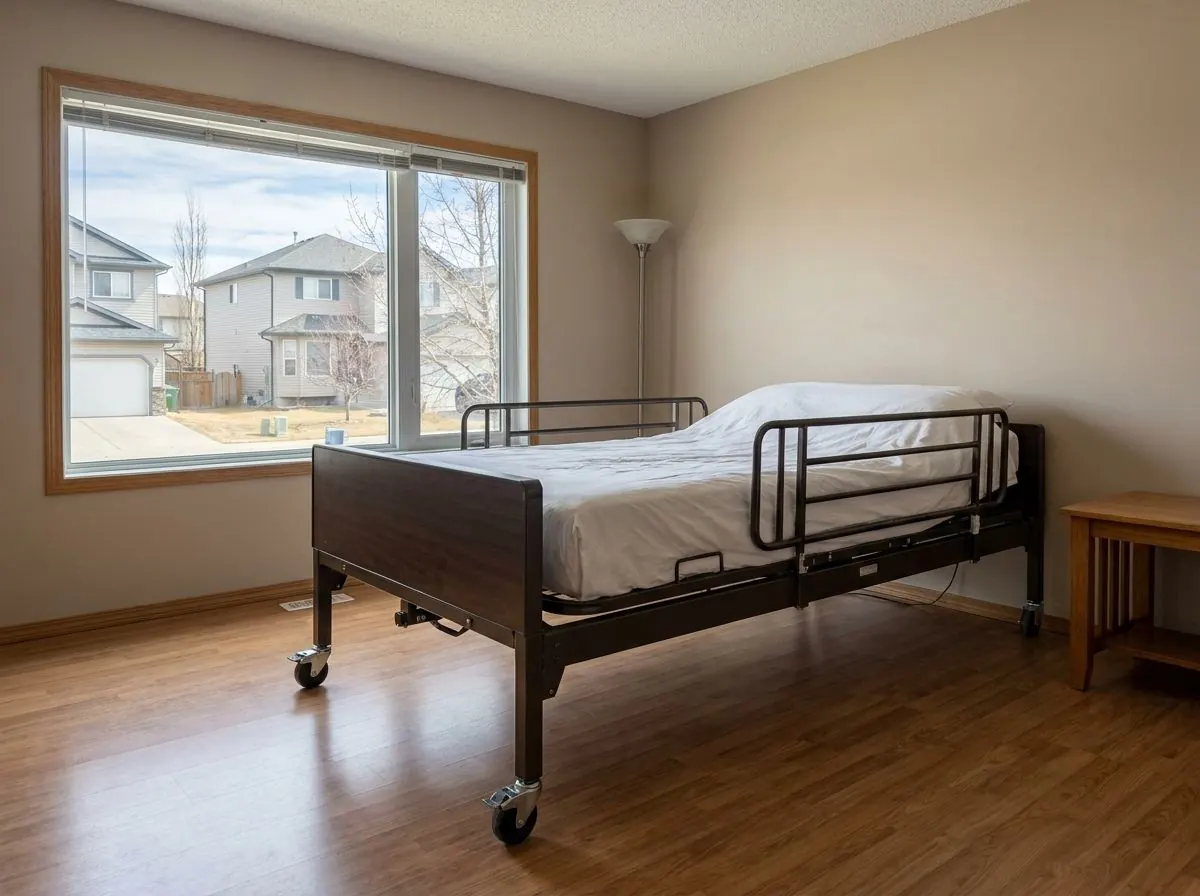
Full-Electric Hospital Bed Rental in Calgary

A full-electric hospital bed moves three ways from one hand pendant. The head section rises for eating, reading and resting upright. The foot section lifts to bend the knees. And the whole bed goes up and down, which matters more than most families expect: raised, it saves a caregiver’s back during washing and dressing; lowered, it lets the person sit on the edge with both feet flat on the floor before standing.

For hospital bed rental in Calgary and the surrounding towns, we rent two well-documented homecare beds: the Drive Medical Delta Ultra-Light 1000 and the Invacare 5410IVC. Each arrives in sections, is assembled in the room you choose and is tested with you before we leave. You rent by the month and keep it only as long as it is needed.

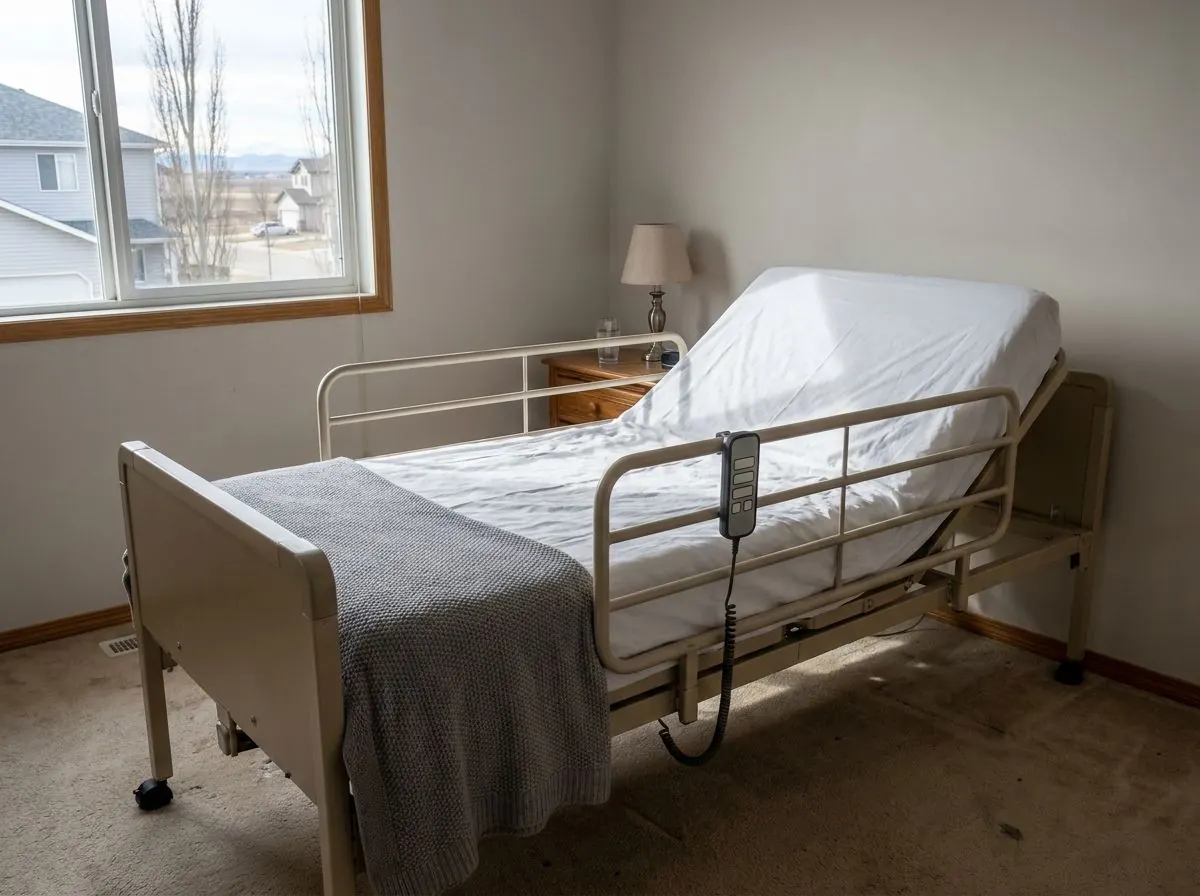
A full-electric hospital bed in a home bedroom with the head section raised to a sitting angle, half rails up and a corded hand pendant clipped to the rail.
Full-electric bed with the head raised

Monthly rental

$375–$495/mo

Models we rent

  • Drive Medical Delta Ultra-Light 1000 Full-Electric Bed (15033)
  • Invacare 5410IVC Full-Electric Bed
  • Delivered and set up in your home
  • Cleaned and safety-checked before every rental
  • Itemized receipts for benefits claims

Who this rental is for, and when it is needed

Most calls come a day or two before someone leaves hospital. A physiotherapist at Foothills Medical Centre or Rockyview General Hospital has said the patient needs to sleep with the head raised, or needs a rail to hold while turning, and the family has a bedroom with a queen bed and no plan. A standard full-electric bed is usually the answer when the person is within the bed’s weight rating and fits a regular 36-inch-wide mattress.

It also suits longer stays at home: a parent with heart or lung disease who is more comfortable sleeping propped up, someone recovering from a hip fracture who needs the bed height set for safe transfers, or a person in palliative care whose family and home care nurses reposition them several times a day. In each case the bed does the lifting that pillows, a sofa or a caregiver’s back would otherwise have to do.

Clinicians often specify the bed and families usually book it. If a nurse, OT or PT at Peter Lougheed Centre or South Health Campus has given you a list, read it to us over the phone and we will match the bed, rails and mattress to it. We are an independent rental company with no connection to any hospital, so the recommendation always comes from the care team and the logistics come from us.

Situations we set this up for

  • Going home from hospital in the next day or two with a bed on the care plan
  • Sleeping with the head raised after a heart or breathing-related admission
  • Recovery from a hip fracture or joint surgery with assisted transfers
  • Palliative care at home, with nurses repositioning through the day
  • A caregiver doing bed baths and dressing changes at waist height
  • A main-floor den or living room turned into a bedroom

Models and specifications

Figures below are the manufacturer's published specifications. We confirm the exact unit and its ratings with you before delivery.

Drive Medical

Delta Ultra-Light 1000 Full-Electric Bed Model 15033

The Delta Ultra-Light 1000 is Drive Medical’s full-electric homecare bed: the pendant raises and lowers the head, the foot and the overall height. Drive lists the bed itself at 169 lb (about 77 kg), shipped in two cartons, which is part of why it goes up a narrow staircase and into a small bedroom without drama.

Its power-failure plan is built into the hand control. A 9-volt battery in the pendant can lower the head and foot sections nine times, with no crank to find in the dark. That covers the most common outage problem, someone sitting upright when the power drops who wants to lie flat. Drive describes the battery lowering the head and foot only, so plan on the bed height staying where it was until the power returns.

Drive states that the bed, side rails and mattress were safety-tested by SGS and that the bed satisfies applicable FDA entrapment guidelines. Side rails go on using labels and colour-coded springs so they are installed the right way round, and the motor can be removed and replaced with the person still in bed if service is ever needed. Standard length is 80 inches; an extension kit takes it to 84 inches for a tall person.

Weight capacity
450 lb (204 kg) maximum, including the occupant
Length
80" standard; 84" with extension kit 15030EXTKIT
Bed weight
169 lb (77 kg)
Controls
Hand control for head, foot and bed height
Power-failure backup
9V battery in the hand control lowers head and foot up to 9 times
Deck and frame
Zinc-coated spring deck on a channel frame
Rail packages
Full rails (15033BV-FR) or half rails (15033BV-HR)
Invacare

5410IVC Full-Electric Homecare Bed Model 5410IVC

The Invacare 5410IVC is a full-electric homecare bed run from a six-button remote for the head, the feet and the bed height. Its sleep surface is 80 inches long by 36 inches wide (about 203 by 91 cm), and Invacare publishes a height range for that surface of 15 to 23 inches (about 38 to 58 cm). Low enough for most adults to sit with feet on the floor, high enough that a caregiver is not stooping.

Where the Drive relies on a pendant battery, the Invacare has a built-in hand crank for power outages. A crank does not depend on a battery holding its charge, which some families prefer in rural areas or in older houses where the power trips. We show you where the crank is and how it turns during setup, so nobody is reading a manual by flashlight.

Invacare rates the 5410IVC at 350 lb (about 159 kg) for the patient and 450 lb total. The total has to cover the mattress and anything else on the bed as well as the person, so we check the patient figure first. Invacare sells the mattress and rails separately from the frame, which lets us match both to the person rather than sending a fixed package.

Patient weight capacity
350 lb (159 kg)
Total weight capacity
450 lb (204 kg)
Sleep surface
80" L × 36" W
Sleep surface height
15" to 23"
Controls
6-button remote: head, feet and bed height
Power outage
Built-in hand crank
Mattress and rails
Separate components, matched at booking

What makes it work at home

Bed height that suits two people

Raise the bed for a caregiver changing sheets or helping with a wash. Lower it so the person can sit on the edge, feet flat, before standing or pivoting to a wheelchair or commode.

Head up without stacked pillows

The head section lifts the whole upper body on one supported surface. It stays put overnight, where a pile of pillows slides and leaves the person slumped by morning.

A foot section that bends the knees

Raising the foot section a little when the head is up helps reduce the slow slide toward the foot of the bed that otherwise means hauling someone back up several times a day.

A known plan for power outages

The Drive pendant’s 9-volt battery lowers the head and foot; the Invacare has a built-in hand crank. We practise the backup with you on setup day.

Rails chosen with the care team

Half rails give a handhold for turning while leaving an open side to get out. Full rails are fitted when the care plan asks for them, installed to the maker’s markings.

A footprint an ordinary room can take

At 36 by 80 inches, the Invacare sleep surface is a little narrower than a twin bed and a few inches longer, so it usually fits a spare bedroom or den with room to work beside it.

Delivery and setup

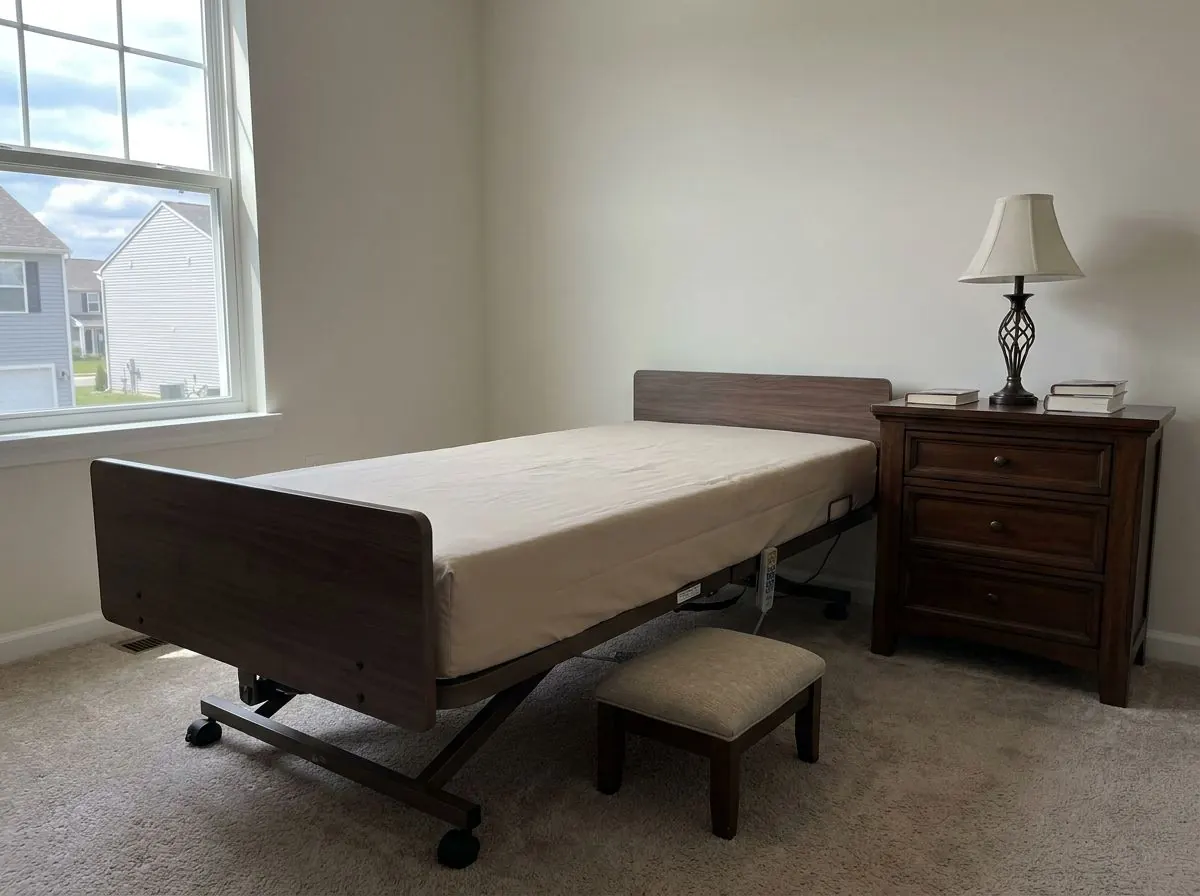
Each bed travels in sections: the head end, the foot end, the spring deck and the motor. Because no single piece is the size of the finished bed, a 30-inch bedroom door or a turning staircase is usually manageable. We carry the sections in, assemble the bed where it will stay, fit the rails, put the mattress on, plug the bed into a wall outlet and run every function with the pendant while you watch.

Before we leave, the person who will do most of the care presses the buttons themselves. We show the outage backup for that model, how to lower a rail for a transfer without catching fingers or bedding, and how to set the height for sitting up versus for care. If discharge from Foothills or South Health Campus is tomorrow morning, phone early today: same-day delivery is often possible when a bed is in stock and you call early.

How in-home setup and pickup work
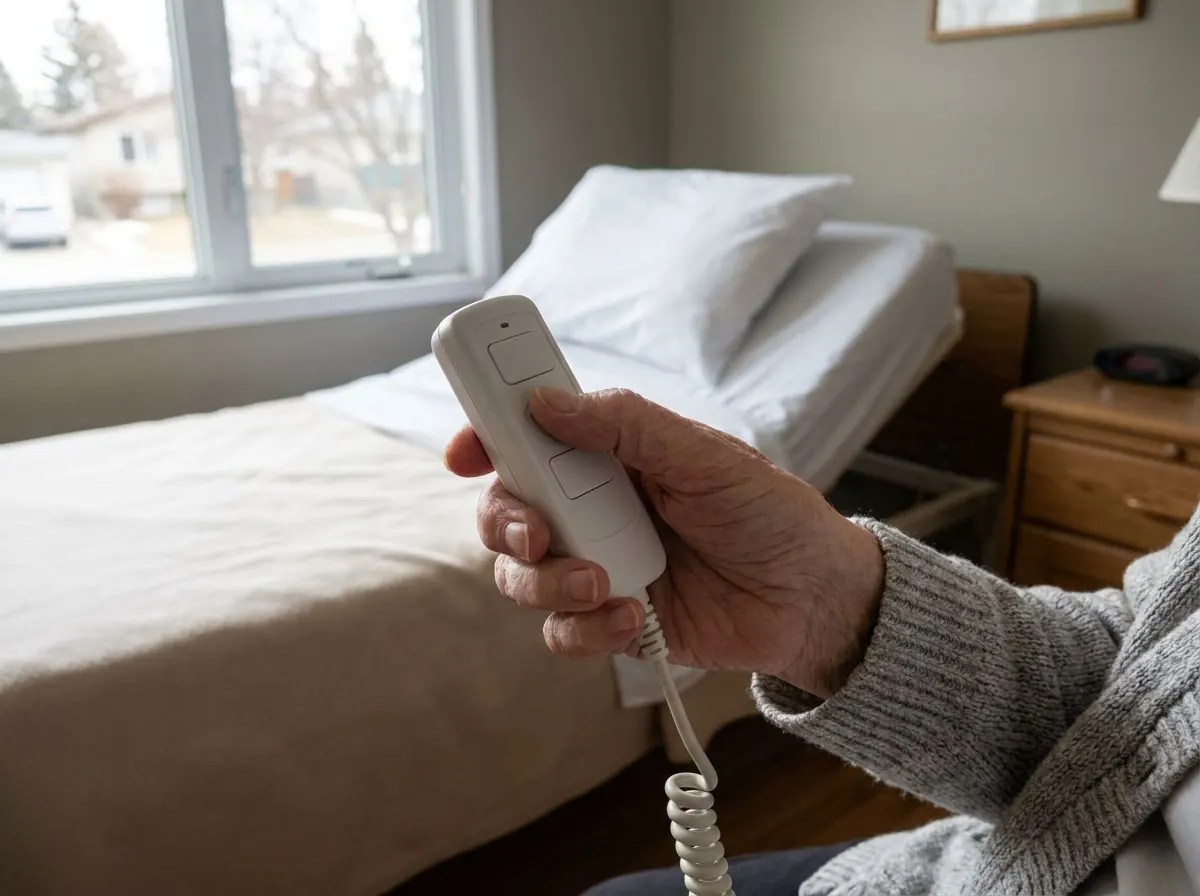
Close view of an older person’s hand holding a hospital bed hand pendant, with the made bed and raised head section softly out of focus behind.
The hand pendant raises the head, the foot and the bed height

Before we arrive

  • Measure the narrowest door and any tight staircase turn between the entrance and the room.
  • Decide what happens to the existing bed; the hospital bed needs its own floor space.
  • Leave at least one long side of the bed open for a caregiver, walker or commode.
  • Find a wall outlet within reach of the bed, so no extension cord crosses the floor.
  • Lift loose rugs along the route and around the bed.
  • Put a lamp or night light where the person can reach it from bed.
  • Have the discharge notes handy so we can check rails and mattress against them.

Choosing the right one

For most homes the two beds do the same job, and the choice comes down to detail. The Invacare publishes a 350 lb patient rating and a 15 to 23 inch height range, and uses a hand crank in an outage. The Drive publishes a 450 lb maximum that includes the occupant, uses a pendant battery to lower the head and foot, and can be lengthened to 84 inches. If the person is over six feet tall, say so; if your power goes out often, say that too.

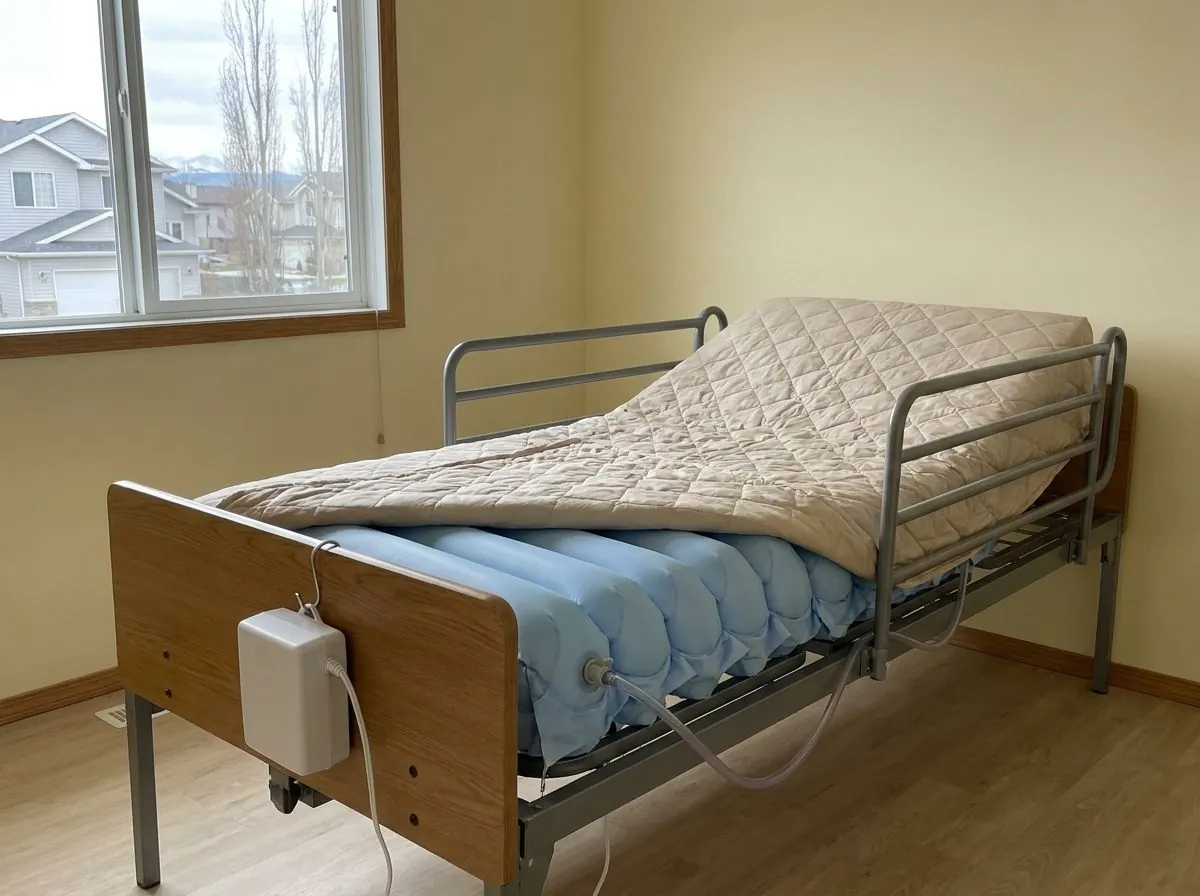
A standard full-electric bed is the wrong choice in three cases. If the person weighs more than the rating or needs more than 36 inches to turn, start with our bariatric beds. If the worry is falling out of bed, especially with dementia or delirium, a low bed that brings the deck near the floor may suit better than rails. And if the concern is skin, the surface matters more than the frame: ask the care team whether an alternating pressure mattress should go on in place of the standard one.

Paying for the rental

Alberta Aids to Daily Living (AADL) can supply a homecare bed to eligible Albertans with long-term needs, but its bed criteria are narrow: the person is palliative, with an estimated six months to end of life, and wants to remain at home, or spends 80 per cent or more of the day in bed. A registered nurse, OT or PT authorizes the benefit, AADL supplies beds from its recycled inventory first, and clients generally pay a 25 per cent cost-share up to a yearly family maximum unless their income qualifies for an exemption. AADL does not reimburse rental charges for temporary or short-term needs, such as recovery before or after surgery, so most families renting a bed pay privately or claim through benefits, and some rent while an AADL bed is being arranged.

Workplace and private plans usually ask for a prescription or written recommendation from the doctor, an itemized receipt, and sometimes a cost estimate before you rent. We provide itemized receipts that name the bed and the rental period. Some individual Alberta Blue Cross plans list hospital beds as a benefit, but whether a rental qualifies depends on the plan, so check your booklet or call. On tax: a hospital bed can be zero-rated for GST when it is supplied on the written order of a qualifying health professional for the person named in it, so send us any such order and we will confirm how GST applies. If the need comes from a WCB claim, WCB must approve the equipment before you rent; speak to the case manager first.

Insurance and funding guides

Discharge coming up

Coming home from hospital in the next day or two?

Phone us with the discharge date and what the care team has recommended. We book delivery to arrive before the patient does, whether they are leaving Foothills Medical Centre, Peter Lougheed Centre, Rockyview General Hospital or South Health Campus. Same-day delivery depends on stock and the time you call, so the earlier the better.

Full-Electric Beds: common questions

Will a hospital bed fit through my bedroom door?
Almost always, because it is not carried in assembled. The bed comes as a head end, a foot end, deck sections and a motor, and we build it inside the room. Tell us the width of the narrowest door and whether there is a tight turn on the stairs, and we will flag anything unusual before delivery day.
What happens to the bed if the power goes out?
It depends on the model. On the Drive Delta Ultra-Light 1000, a 9-volt battery in the hand control can lower the head and foot sections up to nine times. The Invacare 5410IVC has a built-in hand crank. Either way, we show the caregiver how the backup works before we leave.
Can the bed go in a basement or upstairs bedroom?
Yes, if the route is clear, since the bed is carried in pieces. The better question is whether the person can manage the stairs. Many families set the bed up in a main-floor room near a bathroom for the first weeks home, then move things around once mobility improves.
Which mattress comes with the bed?
We fit a 36 by 80 inch homecare mattress matched to the bed, unless the care team has asked for a pressure-care surface. If a nurse has mentioned skin breakdown, an air mattress, or turning schedules, tell us when you book so the right surface goes on from day one.
My father is six foot three. Will his feet hang off the end?
The standard sleep surface on both beds is 80 inches, about 203 cm. The Drive Delta Ultra-Light 1000 accepts an extension kit that lengthens it to 84 inches, so mention his height when booking and we will set the bed up for it.
Do the side rails have to be full length?
No. Many people do well with half rails, which give a handhold for turning and leave space to get out. Full rails are a clinical decision because a confused person may try to climb over them. Follow the care team’s advice, and if they have not said, ask them before delivery.
Can the bed be ready before my mother leaves Rockyview?
That is the usual plan. Give us the discharge date and the address, and we book delivery so the bed is assembled and tested before she arrives home. Same-day delivery is often possible when the bed is in stock and you phone early in the day, so call as soon as the date is known.
How long can we keep the bed?
As long as it is needed. Rentals run by the month, whether that is a few weeks of post-surgical recovery or many months of care at home. When you no longer need it, phone us and we will book a time to take it apart and collect it.

Rent full-electric beds in Calgary

Tell us who it is for, the date you need it and the room it goes in. We will confirm the model, the monthly rate and a delivery window.

Call Now Book a Rental