Equipment rentals
Patient Lift and Mobility Scooter Rentals in Calgary
This category covers two different problems. Patient lifts solve the transfer: getting someone from bed to wheelchair, chair to commode, or up to standing, without a caregiver taking their weight. Mobility scooters solve distance: getting someone who can still walk a little to the places they can no longer walk to.
We rent battery-powered floor lifts (the kind most people call a Hoyer lift), electric sit-to-stand lifts, and four-wheel mobility scooters by the month across Calgary and nearby towns. Each is delivered, set up in the room or garage where it will be used, and demonstrated to the people using it. Below is how to tell which one fits, and where our range stops.
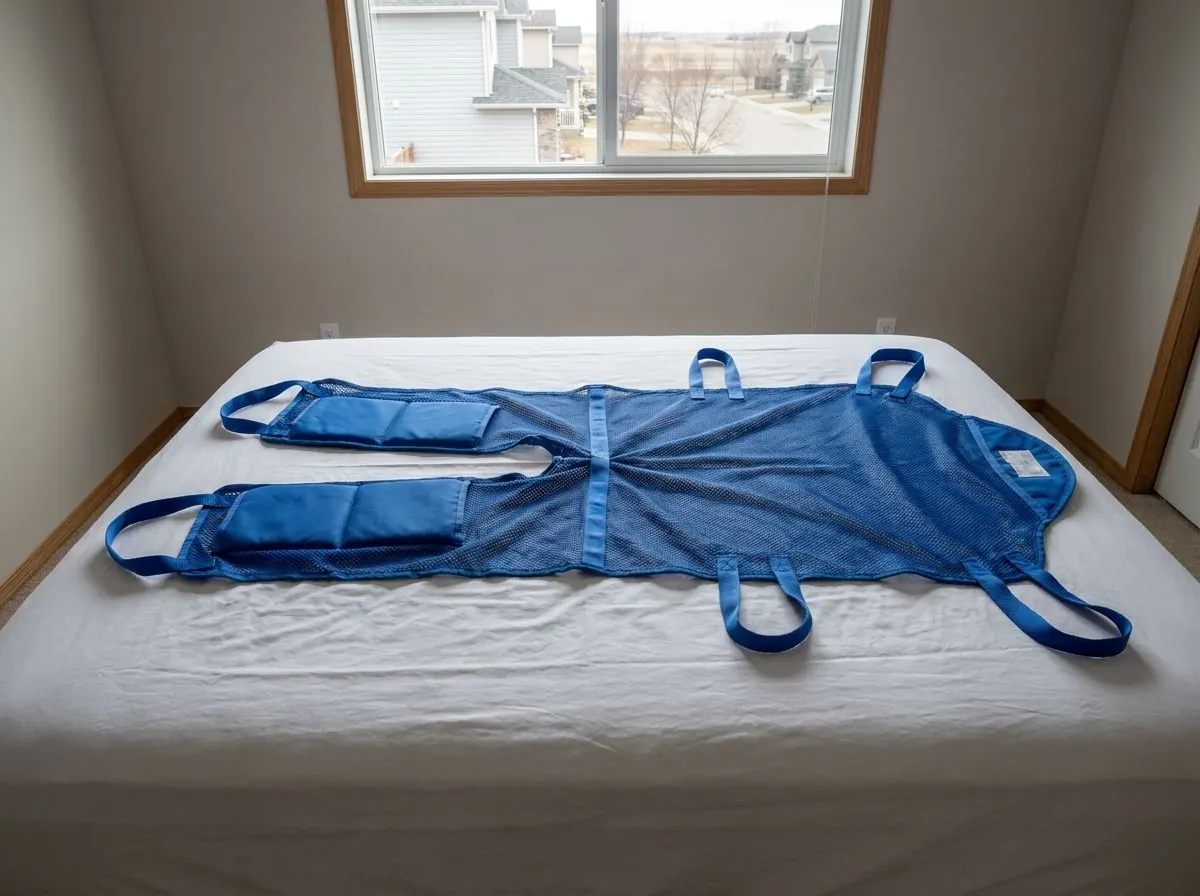
Choose your equipment
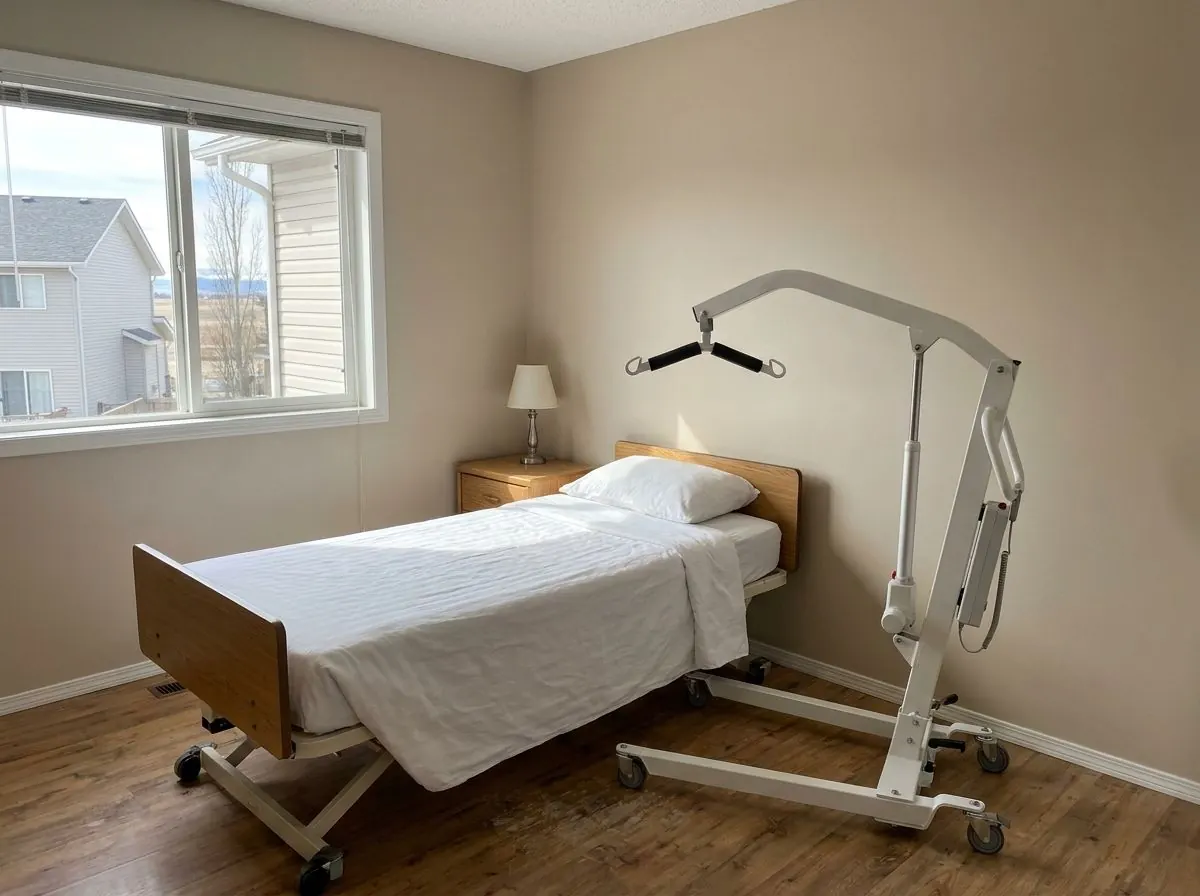
Battery-Powered Electric Patient Lifts
Motorized full-body transfers from bed to chair, with a sling.
Models: Invacare Reliant 450 Battery-Powered Lift (RPL450-1) · Drive Medical Battery-Powered Patient Lift (13240)
- Battery-powered
- Full-body sling transfer
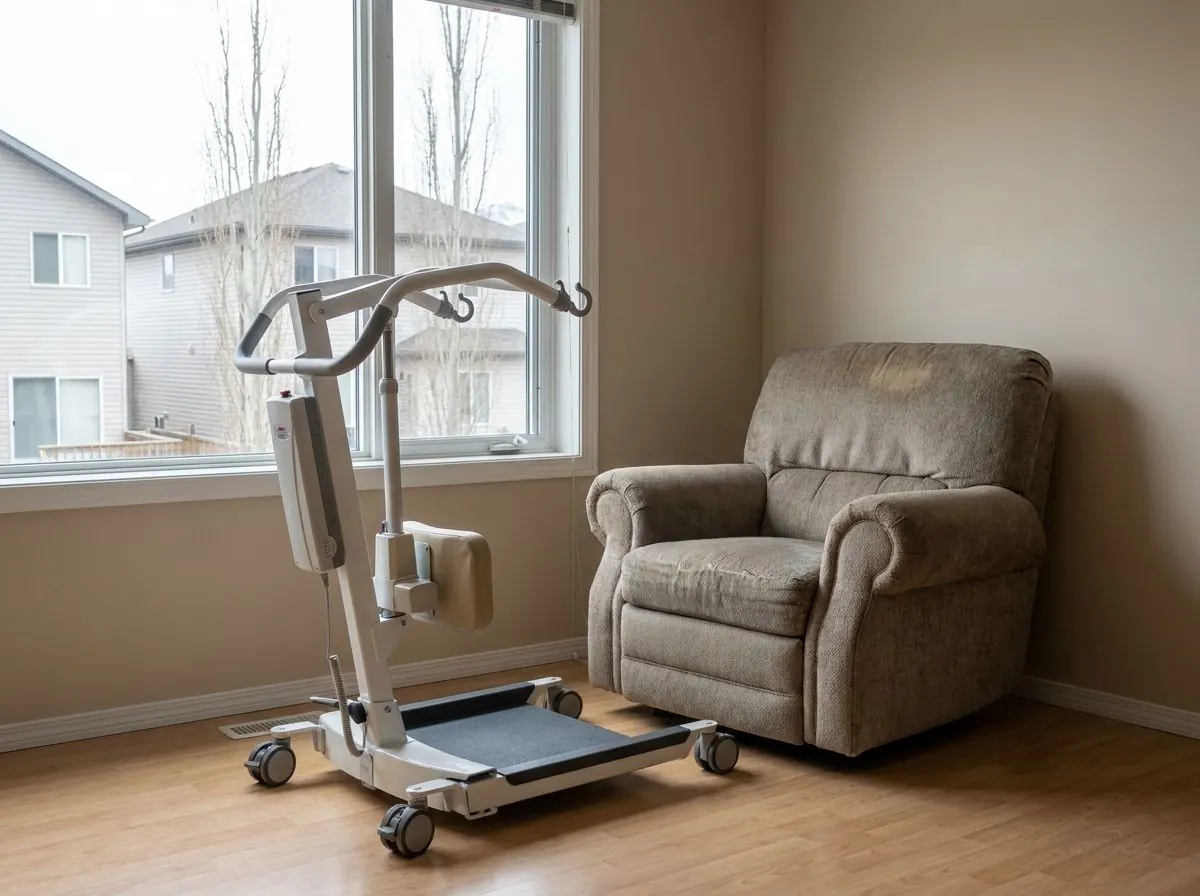
Electric Sit-to-Stand Patient Lifts
Powered standing transfers for people who can bear some weight.
- Partial weight-bearing
- Powered standing
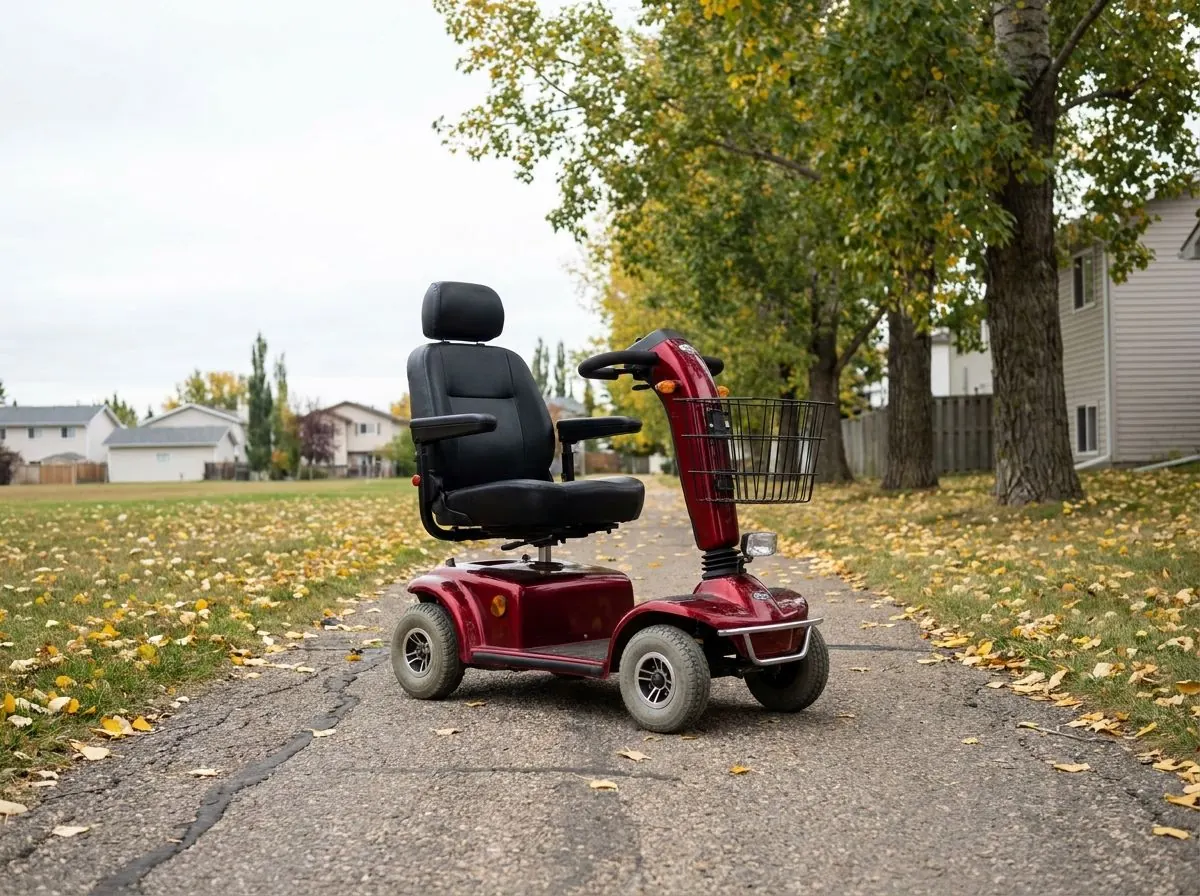
Heavy-Duty Mobility Scooters
Four-wheel outdoor scooters with high weight capacity and long range.
Models: Pride Mobility Victory 10.2 4-Wheel (S7102) · Golden Technologies Patriot 4-Wheel (GR575)
- 4-wheel stability
- Long-range batteries
Which one fits the need?
| If the need is… | Look at | Why |
|---|---|---|
| The person cannot stand or bear weight for a transfer | Hoyer Lifts | A full-body sling carries all of their weight between bed, chair and commode. Both models we rent carry 450 lb. |
| Palliative care at home with bed-to-chair or commode moves | Hoyer Lifts | Transfers stay possible as strength declines, and caregivers are not lifting by hand. |
| The person can take some weight and follow cues, but cannot rise alone | Sit-to-Stand Lifts | A powered standing transfer keeps their legs working and suits toileting and clothing changes. |
| Rehab after a stroke or fracture, with standing practice in the plan | Sit-to-Stand Lifts | Fits a therapist’s plan to keep the person standing through the day as strength returns. |
| Can walk around the house but not to the shops, park or pathway | Mobility Scooters | A four-wheel scooter covers outdoor distance for someone who can still get on and off the seat. |
| A scooter that has to go in the car | Mobility Scooters | The Pride Victory 10.2 comes apart, and its heaviest piece is 64.5 lb. |
Floor lift or sit-to-stand: how the care team decides
The deciding question is weight-bearing. A floor lift, the machine everyone calls a Hoyer, holds the whole person in a sling that hangs from a boom. They do nothing physical during the move. A sit-to-stand lift brings them from sitting to a supported stand with their feet on a plate and their shins against a pad, and they carry part of their own weight through the rise. That makes it more active and quicker, but only safe for someone whose legs, balance and attention are reliable.
Therapists usually look at a handful of things before choosing: whether the person can sit on the edge of the bed unsupported, whether they can bear weight through at least one leg, whether they have the grip and shoulder strength to hold on, and whether they can follow instructions consistently, including at night. A person can move between the two over time. Someone discharged from a spinal cord or stroke rehab stay might start with a full sling lift and step down to a standing lift as they recover; someone with a progressive illness often moves the other way.
We do not make that call, and we would rather ask who recommended the lift than guess. If the hospital team at Foothills Medical Centre, Rockyview General, Peter Lougheed Centre or South Health Campus has been transferring the patient one way on the unit, that is the best starting point for home.
- Cannot bear weight, poor sitting balance, or unpredictable on bad days: floor lift
- Bears partial weight, sits unsupported, grips, follows cues: sit-to-stand may suit
- Transfers to the floor or a bathtub: floor lift
- Frequent toilet trips where clothing must be managed standing: sit-to-stand, if the person qualifies
Scooter, power wheelchair or walker: what we rent and what we don’t
A mobility scooter is for someone who walks, just not far. They drive it from a seat on top with a steering tiller, and they need to get on and off it themselves or with a light hand. It is built for outdoor trips: sidewalks, paved pathways, shopping centres. It is not built for tight indoor living, and it offers no postural support.
A power wheelchair is for someone who needs powered mobility most of the day, including indoors, or who cannot transfer easily. It turns in a smaller space and can be fitted with seating that supports the trunk and head. Power wheelchairs normally involve an OT seating assessment, and AADL funds manual and power wheelchairs for eligible Albertans with long-term needs. We do not rent power wheelchairs. If that is what the person needs, ask the OT about an assessment rather than renting a scooter as a stand-in.
A walker or rollator is for someone who can walk with support and mainly needs balance and a place to rest. We do not rent walkers either; pharmacies and home health stores sell them, and AADL lists walkers among its benefit categories for long-term needs. If you are unsure which of the three fits, the honest first step is a conversation with a physiotherapist or OT, not a rental.
- Walks with support over short distances: walker or rollator (not rented here)
- Walks a little, transfers independently, wants outdoor range: mobility scooter
- Needs powered mobility indoors and out, or seating support: power wheelchair via OT assessment (not rented here)
Caregiver safety with lifts and scooters
Mechanical lifts exist largely to protect the people doing the caring. A spouse or adult child who lifts by hand, even with good technique, is at real risk of a back injury, and an injured caregiver can mean the end of care at home. Once a lift is in the house, use it for every transfer the plan covers, not just the hard ones.
Follow the transfer plan exactly. If the care team says two caregivers, schedule transfers around when two people are home. Check the sling for fraying, loose stitching or worn straps before each use, and hook up the same loops the therapist showed you each time. Keep both hands available: the lift does the raising, and you steady and reassure. Know the emergency lowering method on your lift before you need it. At setup we have caregivers practise with an empty sling.
Scooters carry a different risk: the rider is the driver. Family members can help by walking the first few routes with the rider, checking that curb cuts and pathway sections are manageable, and making sure the scooter is charged before every outing. Cold shortens battery range, so in spring and fall plan shorter trips and keep the scooter stored indoors.
Going home with a lift or scooter, and paying for it
Lift rentals usually start from a discharge plan. Phone with the discharge date, the person’s weight, the sling and lift the team has used on the unit, and the kind of bed at home. Scooter rentals are rarely urgent, so a few days’ notice lets us confirm storage, charging and whether it needs to travel by car.
AADL funds patient lifters and slings, and wheelchairs, for Albertans with long-term needs through authorizing nurses and therapists, but it does not reimburse short-term rentals and it excludes pre- and post-operative use. Many families rent while an AADL request is in progress. WCB Alberta requires pre-approval and an OT assessment for equipment on a workplace injury claim, so talk to your case manager before renting. Private and workplace plans vary; most want a physician’s written recommendation and itemized receipts, which we provide with every rental.
Discharge coming up
Coming home from hospital in the next day or two?
Phone us with the discharge date and what the care team has recommended. We book delivery to arrive before the patient does, whether they are leaving Foothills Medical Centre, Peter Lougheed Centre, Rockyview General Hospital or South Health Campus. Same-day delivery depends on stock and the time you call, so the earlier the better.
Questions people ask us
What is the difference between a Hoyer lift and a sit-to-stand lift?
Do you rent power wheelchairs or walkers?
Can you deliver a patient lift on the day someone leaves hospital?
Will someone show us how to use the lift?
Which areas do you deliver lifts and scooters to?
Is a scooter a good idea for someone who falls often?
Rent lifts & scooters in Calgary
Phone with the date you need it and who it is for, or book online and we will call to confirm the model and delivery window.