Equipment rentals
Hospital Bed and Pressure Mattress Rental in Calgary
A hospital bed at home is rarely one decision. It is a frame chosen for the person’s weight and the room, a height range chosen for how they get in and out, rails or no rails chosen for how they move, and a mattress chosen for their skin. We rent four kinds of equipment that cover those choices: full-electric beds, bariatric beds, low beds and alternating pressure mattresses.
This guide sets out how the four differ, which one fits which need, and what to sort out in the house before delivery. Every rental is delivered, assembled in the room, tested and explained to the caregiver, and collected when you no longer need it, across Calgary and the surrounding towns.
Choose your equipment
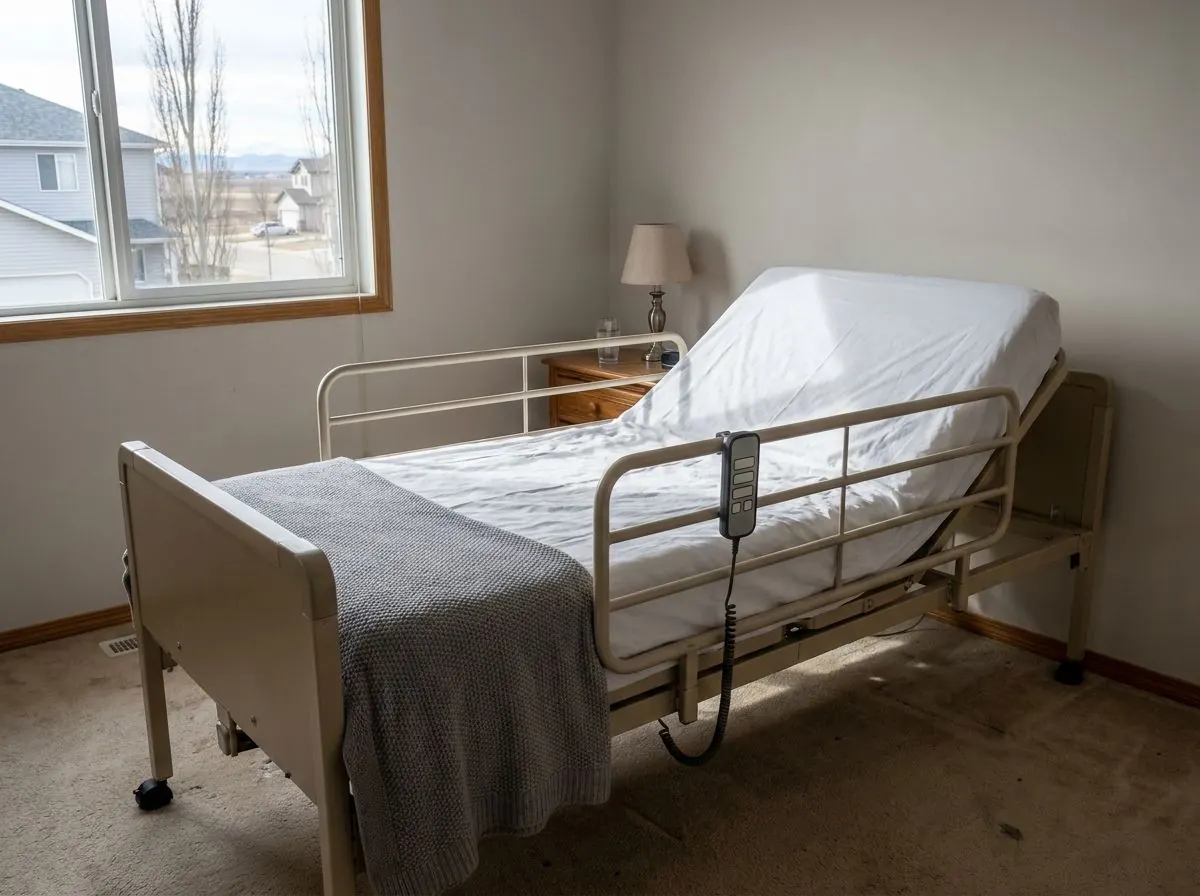
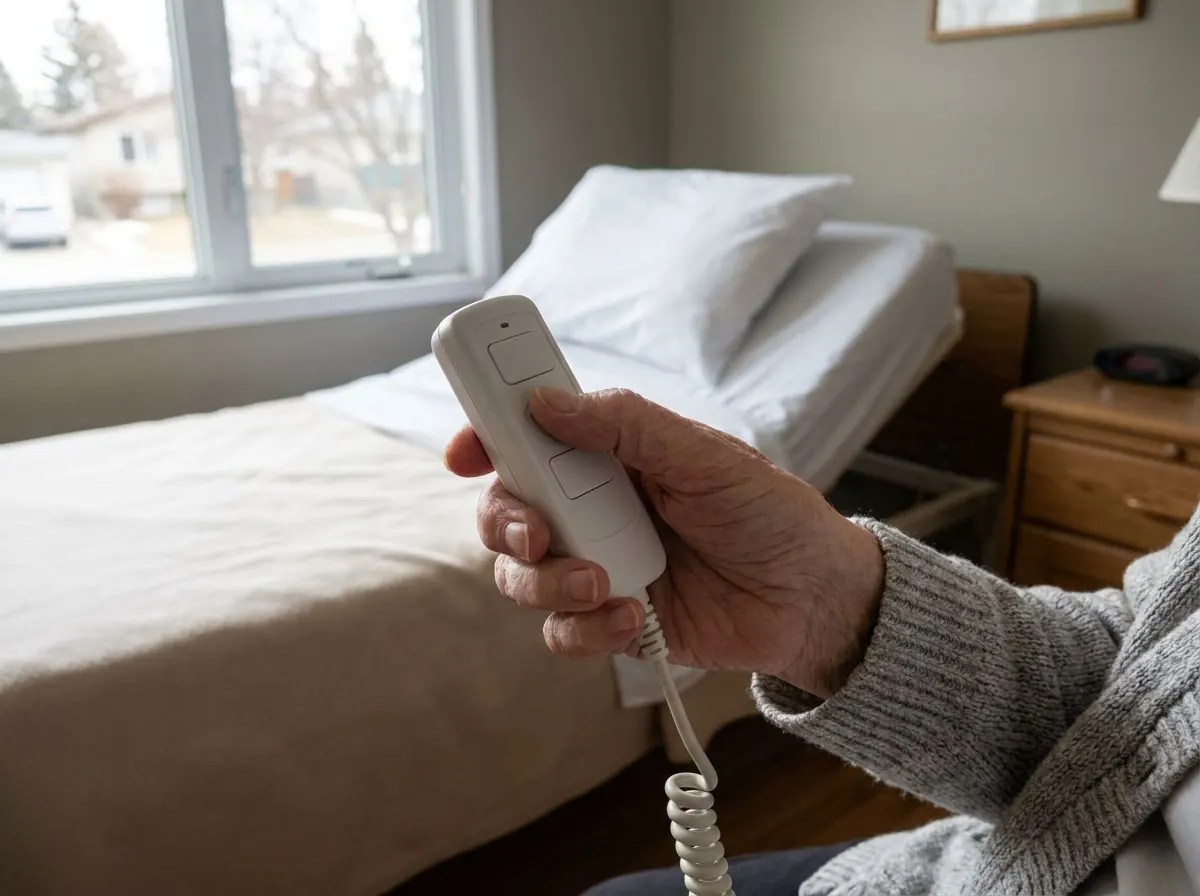
Full-Electric Hospital Beds
Head, foot and bed height all move from a hand pendant.
Models: Drive Medical Delta Ultra-Light 1000 Full-Electric Bed (15033) · Invacare 5410IVC Full-Electric Bed
- Hand-pendant control
- Head, foot & height adjust
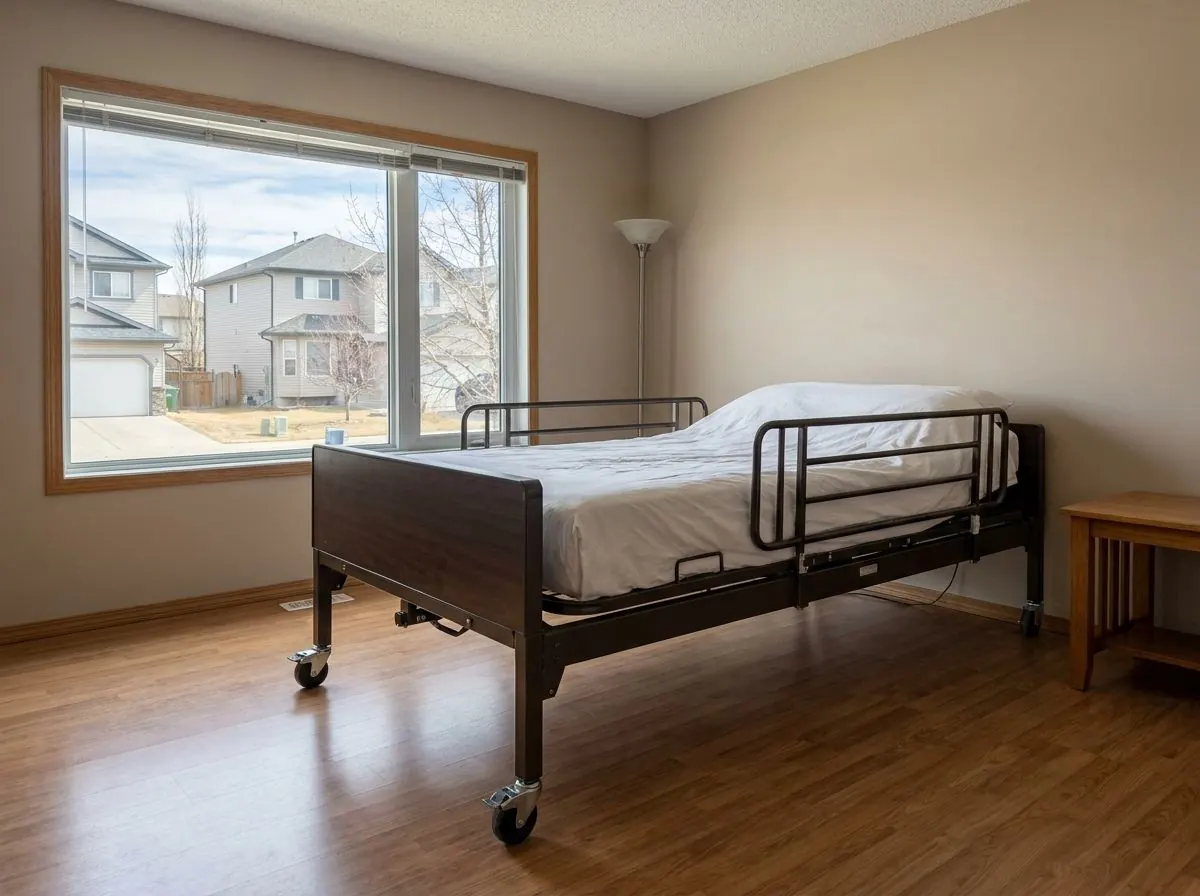
Heavy-Duty & Bariatric Hospital Beds
Heavy-duty steel frames and wider sleep surfaces, rated 600 to 750 lb total.
Models: Drive Medical Full-Electric Bariatric Bed, 42-inch (15300) · Invacare BAR750 Bariatric Bed
- 600–750 lb total capacity
- 42 to 48 inches wide
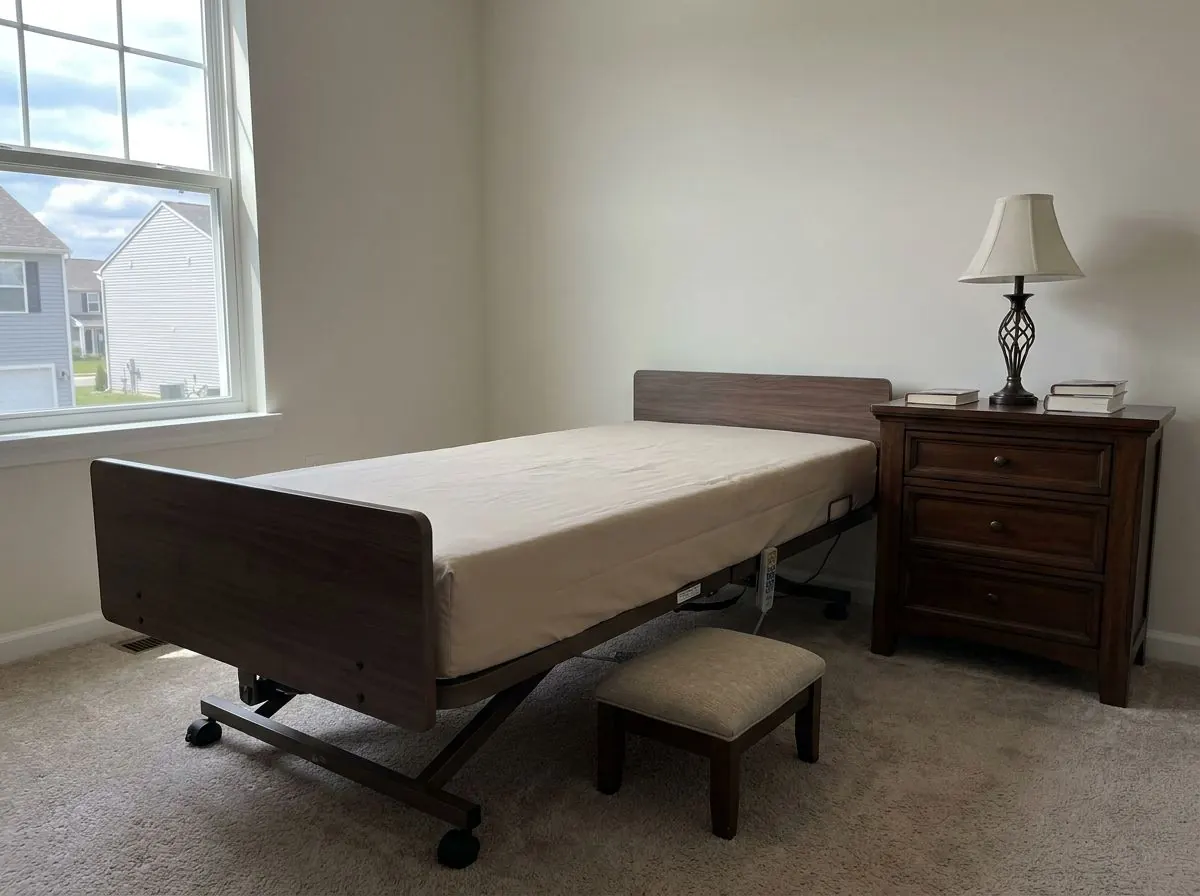
Low-Height Safety Hospital Beds
Lowers close to the floor, with rails and floor mats, to reduce fall injuries.
- Ultra-low deck height
- Rails & fall mats
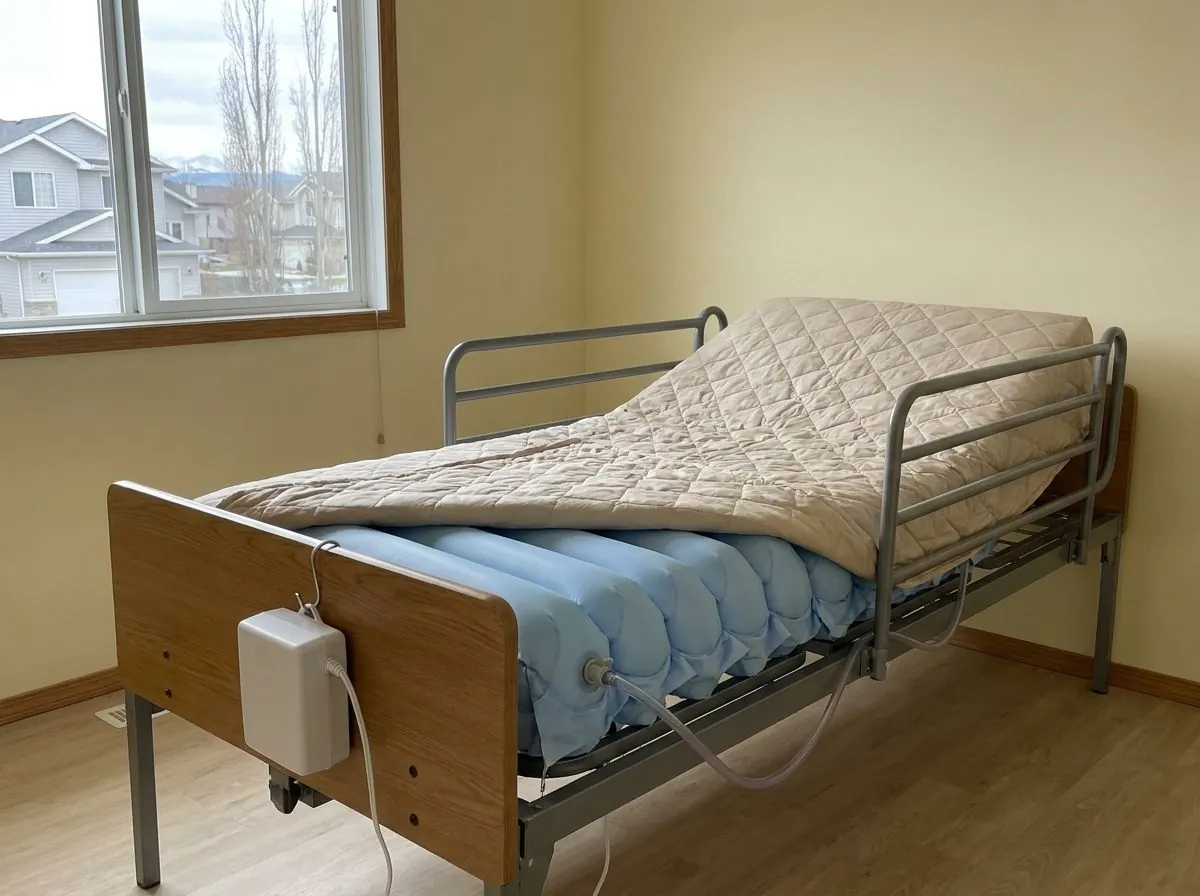
Alternating Pressure Air Mattresses & Overlays
Air cells inflate and deflate in turn to take pressure off skin.
Models: Drive Medical Med-Aire Plus (14029) · Drive Medical Med-Aire Essential (14508) · SPAN (Span-America) PressureGuard
- Alternating air cells
- Mattress or overlay
Which one fits the need?
| If the need is… | Look at | Why |
|---|---|---|
| Head raised for comfort, height for transfers, within a standard weight | Full-Electric Beds | Head, foot and height from one pendant, on an 80-inch-long surface. The Invacare is rated 350 lb patient; the Drive 450 lb including the occupant. |
| Care at home for a tall person | Full-Electric Beds | The Drive Delta Ultra-Light 1000 takes an extension kit that lengthens it from 80 to 84 inches. |
| Weight above a standard patient rating | Bariatric Beds | The Drive bariatric bed carries a 500 lb patient (600 lb total); the Invacare BAR750 a 675 lb patient (750 lb total). |
| Not enough room to turn on a 36-inch surface | Bariatric Beds | A 42-inch Drive frame, or a BAR750 deck that adjusts to 39, 42 or 48 inches. |
| Risk of falling or climbing out of bed | Low Beds | The deck lowers to about 9 to 10 inches, with floor mats and a rail choice made by the care team. |
| Dementia or delirium where rails are not appropriate | Low Beds | A short drop to a mat replaces a barrier the person might try to climb. |
| Existing pressure injury or high risk of skin breakdown | Pressure Mattresses | Air cells alternate on a model-specific cycle; some systems add low air loss or lateral rotation. |
| Pressure care for a heavier person or wide bed | Pressure Mattresses | The PressureGuard Easy Air is rated 500 lb in Float and Alternating modes, in widths up to 53 inches. |
Choosing by weight, width and the room
Start with the person’s weight, because it rules beds in or out. Manufacturers publish a total capacity, which covers the person plus the mattress and accessories, and often a lower patient maximum. Always compare the person’s weight with the patient figure.
Then look at width. A standard homecare surface is 36 inches wide, about 91 cm. That suits most adults, but a larger person may be within a weight rating and still have no room to turn. Bariatric frames are 42 inches wide or more, and the Invacare BAR750 adjusts up to 48 inches.
Finally, the room. Beds are carried in as sections and built in place, so doorways are rarely the obstacle. Floor space is. Leave working room on at least one long side for a standard bed, and on both sides for a bariatric bed where two caregivers will reposition together.
- Drive Delta Ultra-Light 1000 (full-electric): 450 lb maximum, including the occupant; 80 inches long, 84 with an extension kit
- Invacare 5410IVC (full-electric): 350 lb patient, 450 lb total; 36 × 80 inch sleep surface; 15 to 23 inches high
- Drive Full-Electric Bariatric Bed, 42-inch: 500 lb patient, 600 lb total
- Invacare BAR750: 675 lb patient, 750 lb total including mattress and accessories; 39 to 48 inches wide
- Low beds in this class: deck lowers to about 9 to 10 inches; the example models carry 450 lb total
Hospital bed or adjustable bed?
Furniture-store adjustable beds raise the head and the feet, and some are very comfortable. What they generally do not do is raise and lower the whole bed, and that is the function caregivers use most. At working height, washing, dressing and changing sheets happen without stooping. At a low height, the person can sit on the edge with feet flat before standing.
A hospital bed also takes hospital rails, installed to the manufacturer’s markings, and a hospital-size mattress or air system that fits the deck. For a few weeks of recovery where the person moves independently, an adjustable bed or a power lift recliner may be enough. Once a caregiver is helping with turning, transfers or personal care, the hospital bed earns its place in the room.
Pressure care: when the mattress matters more than the frame
A person who cannot shift their own weight spends hours on the same spots, usually the tailbone, hips and heels. Alternating pressure mattresses redistribute that load by inflating and deflating air cells in turn. Some also add low air loss, which moves air through the surface, or lateral rotation, a slow side-to-side tilt.
The models differ more than their names suggest. Cycle times run roughly 8 to 25 minutes depending on the model, weight ratings run from 350 to 500 lb, and only some systems hold their inflation in a power outage. The manufacturers also word their indications differently: Savaria indicates the PressureGuard Easy Air for treatment of Stage 1 to 4 pressure injuries, while Drive describes the Med-Aire Essential as helping to reduce the incidence of pressure ulcers. The care team chooses the surface; read us their exact wording and we match the system to it.
Preparing the room before discharge day
Most bed rentals are booked a day or two before someone comes home from Foothills Medical Centre, Peter Lougheed Centre, Rockyview General Hospital or South Health Campus. The goal is a bed that is built, tested and made up before the person walks or is wheeled through the door. A little preparation makes that setup visit quicker and the first night calmer.
Choose a room close to a bathroom, ideally on the main floor. Decide where the existing bed goes. And have the discharge notes ready, because they tell us the rails, mattress and height the care team expects.
- Measure the narrowest door and any tight stair turn on the route
- Clear floor space for the bed and working room beside it
- Keep a wall outlet free near the head of the bed, plus one for a mattress pump
- Lift loose rugs around the bed and along the route
- Put a night light between the bed and the bathroom
- Have the person’s current weight and the discharge notes to hand
Discharge coming up
Coming home from hospital in the next day or two?
Phone us with the discharge date and what the care team has recommended. We book delivery to arrive before the patient does, whether they are leaving Foothills Medical Centre, Peter Lougheed Centre, Rockyview General Hospital or South Health Campus. Same-day delivery depends on stock and the time you call, so the earlier the better.
Questions people ask us
Which hospital bed does my parent need?
Can I rent a hospital bed for just one month?
Will AADL pay for a rented hospital bed?
Do I pay GST on a hospital bed rental?
Can you deliver before discharge from Foothills or South Health Campus?
Will my private insurance cover the rental?
Rent hospital beds in Calgary
Phone with the date you need it and who it is for, or book online and we will call to confirm the model and delivery window.