Skip to content
Discharge-day delivery: (825) 445-5851

Patient Transfer Lifts & Power Mobility

Sit-to-Stand Lift Rental in Calgary

A sit-to-stand lift, also called a stand-up lift or standing aid, helps a person rise from sitting to standing with a strap around their back, their feet on a footplate and their shins resting against a knee pad. A motor does the pulling. The person holds the handles, takes some of their own weight through their legs, and is brought up into a supported stand so the caregiver can turn them to a wheelchair, commode, toilet or bed.

It sits between doing a transfer by hand and using a full-body sling lift. For the right person it keeps the legs working and keeps them part of the move, which matters to both dignity and recovery. For the wrong person it is unsafe. That is why the physiotherapist or occupational therapist should decide whether a standing lift fits, and we build the rental around their answer.

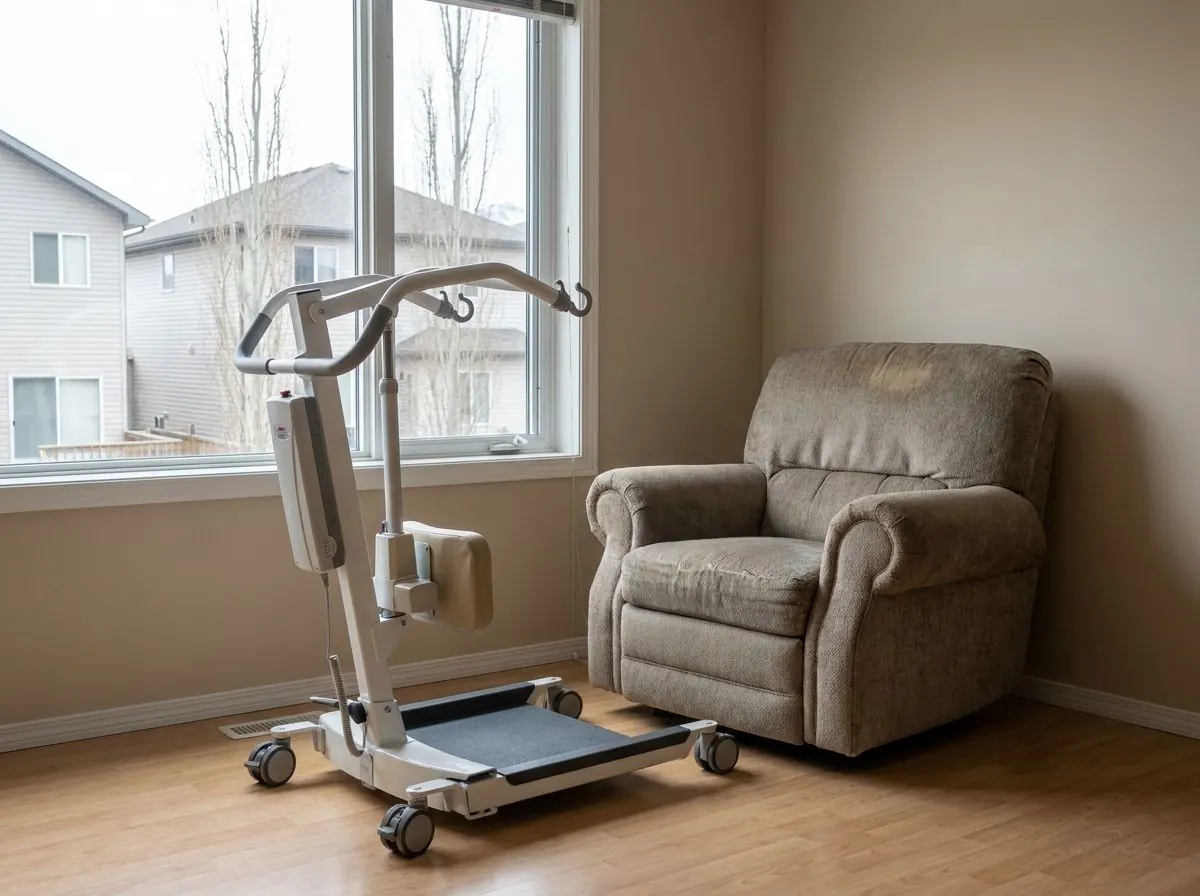
An electric sit-to-stand lift with a padded knee support, footplate and handles, positioned in front of an armchair in a living room.
A sit-to-stand lift positioned in front of an armchair

Monthly rental

Phone for a rate

  • Delivered and set up in your home
  • Cleaned and safety-checked before every rental
  • Itemized receipts for benefits claims

The rate depends on the model we match to the user. Phone and we will quote it on the spot.

Who this rental is for, and when it is needed

Stand-up lifts suit people who can bear partial weight through at least one leg, sit on the edge of a bed or chair without toppling, grip a handle, and understand and follow simple cues such as “lean forward” and “hold on”. In practice that often describes someone a few weeks past a hip fracture repair, a person with a weak side after a stroke who is regaining leg strength, someone deconditioned after a long hospital stay, or an older adult with Parkinson’s who struggles to get up but can stand once upright.

The request usually comes near the end of a rehab stay or in the first days home. A patient who has been working with therapists on a unit at Rockyview General Hospital or South Health Campus might be standing with help from one staff member and a standing aid, and the team wants the same method at home so nobody reverts to hauling them up by the arms. Families also call when a parent living at home starts needing two people to get off the toilet, and home care suggests a mechanical aid before someone gets hurt.

Situations we set this up for

  • Standing transfers with a therapist and standing aid before discharge
  • Toilet and commode transfers that now take two people
  • Rebuilding leg strength after a stroke, fracture or long illness
  • A caregiver being pulled forward or off balance during stand-ups
  • Stepping down from a full sling lift as rehab progresses
  • Getting up from a recliner or wheelchair to change clothing or pads

Models and specifications

Figures below are the manufacturer's published specifications. We confirm the exact unit and its ratings with you before delivery.

Invacare

Reliant 350 Stand-Up Lift Model RPS350-1

We match each sit-to-stand rental to the person, so the two lifts on this page are examples of the class rather than a fixed list. We confirm the exact model and its ratings with you before delivery.

The Reliant 350 is Invacare’s electric stand-up lift with a manually opened low base. Its user manual gives a 350 lb weight capacity and a height at sling hook-up of 40 to 66 inches. The base legs open to 37 inches to bring the lift close around a chair and close to 26 inches for doorways. Invacare offers two sling styles for it: a Stand Assist sling for people who are coming up to stand, and a Transfer sling for moving between seated surfaces.

Two points in Invacare’s manual are worth reading twice. It says the lift is not a transport device: it moves a person from one seated or resting surface to another, such as bed to wheelchair, not down the hall. And it says not to attempt a transfer without the approval of the patient’s physician, nurse or medical assistant. We agree with both, and we will ask who on the care team has recommended it.

Weight capacity
350 lb (159 kg)
Height at sling hook-up
40" to 66"
Base width
37" open / 26" closed
Base
Low base, opened manually
Sling options
Invacare Stand Assist or Transfer sling
Drive Medical

Sit To Stand Lift Model STSM450 / STSP450

Drive’s sit-to-stand comes with either a manual base (STSM450) or a power base (STSP450), and both carry 450 lb. That higher rating is the main reason to choose it for a larger person. If the load goes over 450 lb the lift gives an audible and visual alert.

It has dual controls, so if the hand pendant fails the lift still works and the caregiver can finish the transfer. The knee pad adjusts to meet the shins of short and tall users, the footplate is removable, and there are both vertical and horizontal handles so people with different grip strength and arm reach can hold on comfortably. Drive describes its floor clearance as the lowest in its class.

The battery charges either on the lift or removed from it, and a low-battery alert sounds and shows before charge runs out. The power-base STSP450 adds an LCD screen with maintenance monitoring and usage tracking.

Weight capacity
450 lb (204 kg), with over-capacity alert
Base
Manual (STSM450) or power (STSP450)
Controls
Dual controls; still works if the pendant fails
Knee pad
Adjustable
Footplate
Removable
Handles
Vertical and horizontal grips
Battery
Charges on or off the lift; low-battery alert
STSP450 extras
LCD screen, maintenance monitoring, usage tracking

What makes it work at home

The person does part of the work

Standing with support keeps the legs and trunk active through every transfer of the day, which many therapists want during rehab.

Built for bathroom trips

A standing sling holds the person upright at the back and under the arms, leaving the waist free so clothing and continence products can be managed.

Knee pad and footplate

Shins rest against a padded block and feet stay on the plate, so the knees do not buckle forward as the lift rises.

Lighter work for one caregiver

The motor supplies the pull, so the caregiver guides and reassures rather than taking the person’s weight on their own back and shoulders.

A step on the way, not the end

When strength returns, the therapist may remove the footplate or move to a standing pivot. A monthly rental ends when the need does.

Delivery and setup

A standing lift has to fit the person’s body, so we ask more questions at booking than for most equipment: height and weight, which leg is stronger, whether they can sit unsupported on the edge of the bed, what the therapist has written in the transfer plan, and where the stand-ups happen. The bathroom matters most. We look at the doorway, the space in front of the toilet and whether the legs of the base can open around it or around a commode.

At the home we adjust the fit to the user where the model allows (Drive’s knee pad, for example), fit the sling the therapist chose, and show caregivers how to position the lift square to the chair, place feet on the plate, wrap and fasten the sling, raise slowly while cueing the person to lean forward, turn, and lower onto the new surface. We cover charging, the alerts, and the emergency and power-failure steps in the owner’s manual for the model you have. We do not assess whether it is safe for your family member to use. If you are unsure, ask for a home visit from the OT or PT before the first standing transfer.

How in-home setup and pickup work
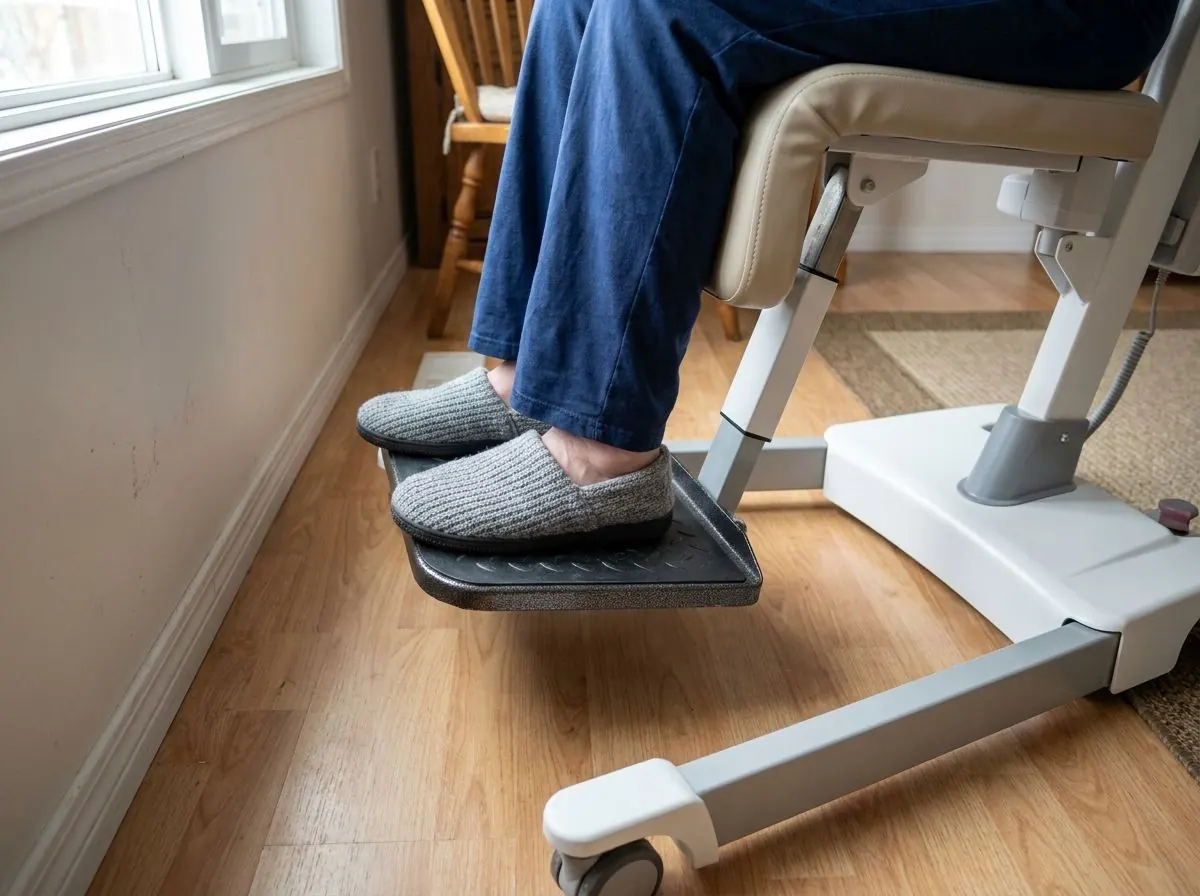
Close view of feet in grippy slippers placed on the footplate of a sit-to-stand lift, shins resting against the padded knee support.
Feet on the footplate, knees against the pad

Before we arrive

  • Ask the therapist to write down the transfer plan and sling type, and have it on hand for delivery.
  • Measure the bathroom door and the floor space in front of the toilet.
  • Have the person wear flat, closed shoes or grippy socks for the first practice.
  • Clear floor space around the bed and the main chair so the base can come straight in.
  • Check that the chair or wheelchair has stable armrests and that wheelchair brakes work.
  • Plan for the main caregiver to be home, and the person too if they are already home.

Choosing the right one

Start with the question only the care team can answer: can this person reliably take weight and cooperate every time, including at night, when tired, or on a bad day? If yes, a sit-to-stand is usually the more active and less time-consuming option. If the answer changes from day to day, or they cannot hold their head and trunk up, a full-body electric sling lift is the safer choice even if it feels like a step backwards.

Between models, weight comes first. Someone close to or over 350 lb needs the Drive’s 450 lb rating. For a smaller person, either lift works, and the choice comes down to sling preference and space: the Invacare pairs with Invacare’s own Stand Assist sling, while the Drive’s removable footplate and backup controls suit households planning a gradual return to unassisted standing. Rates for sit-to-stand lifts depend on the model, so phone and we will quote it.

Paying for the rental

Patient lifters and slings are among the equipment AADL can fund for Albertans with long-term needs, when a registered nurse, OT or PT authorizes them. AADL does not reimburse the cost of renting for short-term needs, and it excludes pre- and post-operative use, so a rental to bridge rehab after hip surgery is usually paid privately or through benefits. If there is a long-term need, ask the therapist whether an AADL authorization makes sense, and rent in the meantime if you cannot wait.

For a workplace injury, WCB Alberta requires pre-approval and an OT assessment before equipment is supplied; talk to your case manager before renting. First Nations and Inuit clients covered by NIHB need a prescription, and NIHB treats rentals as a short-term option generally limited to three months. Private plans usually want a physician’s written recommendation and itemized receipts, which we provide.

Insurance and funding guides

Discharge coming up

Coming home from hospital in the next day or two?

Phone us with the discharge date and what the care team has recommended. We book delivery to arrive before the patient does, whether they are leaving Foothills Medical Centre, Peter Lougheed Centre, Rockyview General Hospital or South Health Campus. Same-day delivery depends on stock and the time you call, so the earlier the better.

Sit-to-Stand Lifts: common questions

What is the difference between a sit-to-stand lift and a Hoyer lift?
A Hoyer-type floor lift carries the person’s full weight in a sling while they stay seated or reclined. A sit-to-stand lift brings them up into a supported standing position while they take some weight on their legs. The first is for people who cannot stand; the second is for people who can partly stand and help.
How do I know if my mother can use a stand-up lift?
Ask her physiotherapist, occupational therapist or home care nurse. They look at leg strength, sitting balance, grip, alertness and how consistent she is from day to day. Invacare’s manual says not to attempt transfers without approval from the patient’s physician, nurse or medical assistant, and we agree.
Does it help with using the toilet?
That is one of its main uses. With the person standing and supported, a caregiver can lower or raise clothing, change a pad or clean up, then lower them onto the toilet or commode. We check your bathroom layout before delivery so the base can get close enough.
Can a sit-to-stand lift help someone get stronger?
Many therapists like that it makes the person use their legs in every transfer. Whether and how it fits a rehab program is the therapist’s call. As strength improves they may change the sling, remove the footplate on a lift that allows it, or move to a walker, at which point you simply return the rental.
What weight can a sit-to-stand lift hold?
It depends on the model. Invacare gives the Reliant 350 a 350 lb capacity, and Drive rates its Sit To Stand Lift at 450 lb. Tell us the person’s current weight when you phone and we will match the unit.
Why is there no monthly price listed?
We match sit-to-stand lifts to the user’s size and sling needs, and the rate depends on the model. Phone us with the person’s weight and the therapist’s recommendation and we will quote the monthly rate on the call.
Can we use it to get someone off the floor after a fall?
No. A standing lift needs the person seated at chair or bed height with feet on the footplate. For floor recovery the care team may recommend a full-body sling lift, and if there is any chance of injury, call for medical help first.

Rent sit-to-stand lifts in Calgary

Tell us who it is for, the date you need it and the room it goes in. We will confirm the model, the monthly rate and a delivery window.

Call Now Book a Rental